
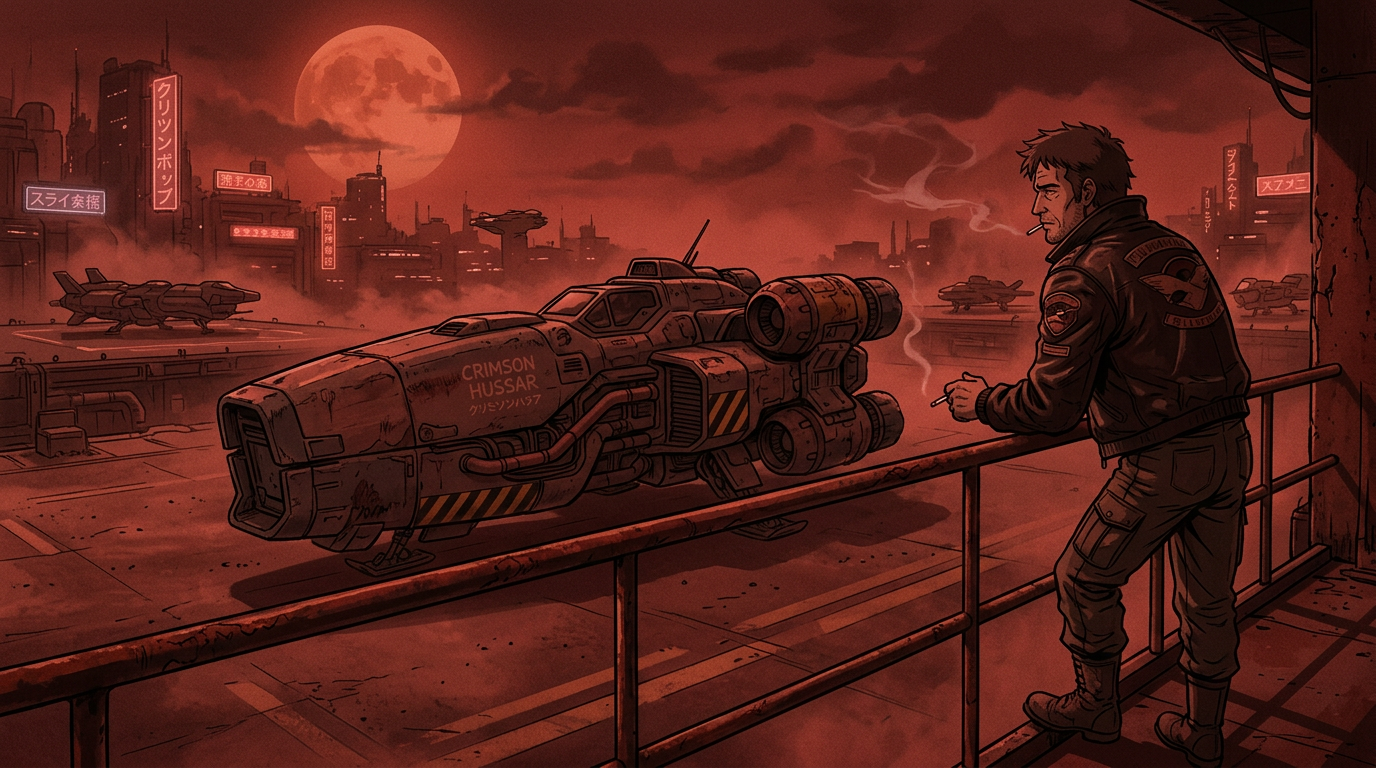
Cowboy Bebop: The Weight of Staying the Same
I finally finished Cowboy Bebop last week, (the original, not the 2019 live-action remake) and what stayed with me caught me off guard. It wasn’t the action or the music.
It was the feeling that no one on that ship was moving forward.
Spike is trapped in a past life he can’t let go of.
Jet is holding onto a version of justice that no longer exists.
Faye wakes up into the future but keeps looking backward.
Ed might be the only one moving freel, and even she eventually leaves.
The Bebop isn’t a crew. It’s a collection of people orbiting their own unresolved pasts.
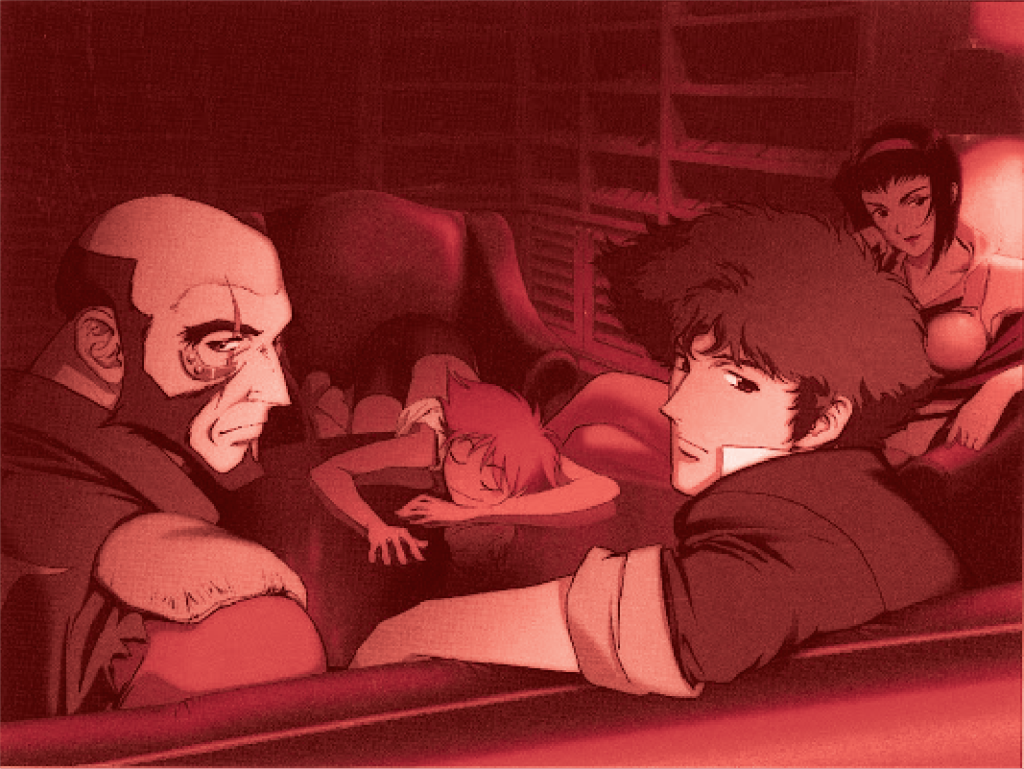
A Show That Refuses to Progress
Most stories are built on change.
Characters grow. They evolve. They learn something and carry it forward.
Cowboy Bebop does something far stranger.
It gives you characters who could grow and then quietly refuses to let them. It doesn’t reward expectation, it expects you to pay attention, and eventually rewards you.
Episodes begin, unfold, and resolve, but nothing fundamentally shifts. The crew survives. They eat beef and bell peppers. Or nothing. They argue. They drift. Then the next episode begins as if nothing really happened.
It’s not even that nothing occurs. It’s that nothing accumulates.
Motion without momentum.
Everyone Is Stuck Somewhere
Each character is anchored to a different version of the past.
Spike moves like a man who already knows how his story ends. He’s circling a conclusion instead of building a future.
Jet tries to impose order on a world that has already moved on from him. His morality is intact, but it no longer fits the environment he’s in.
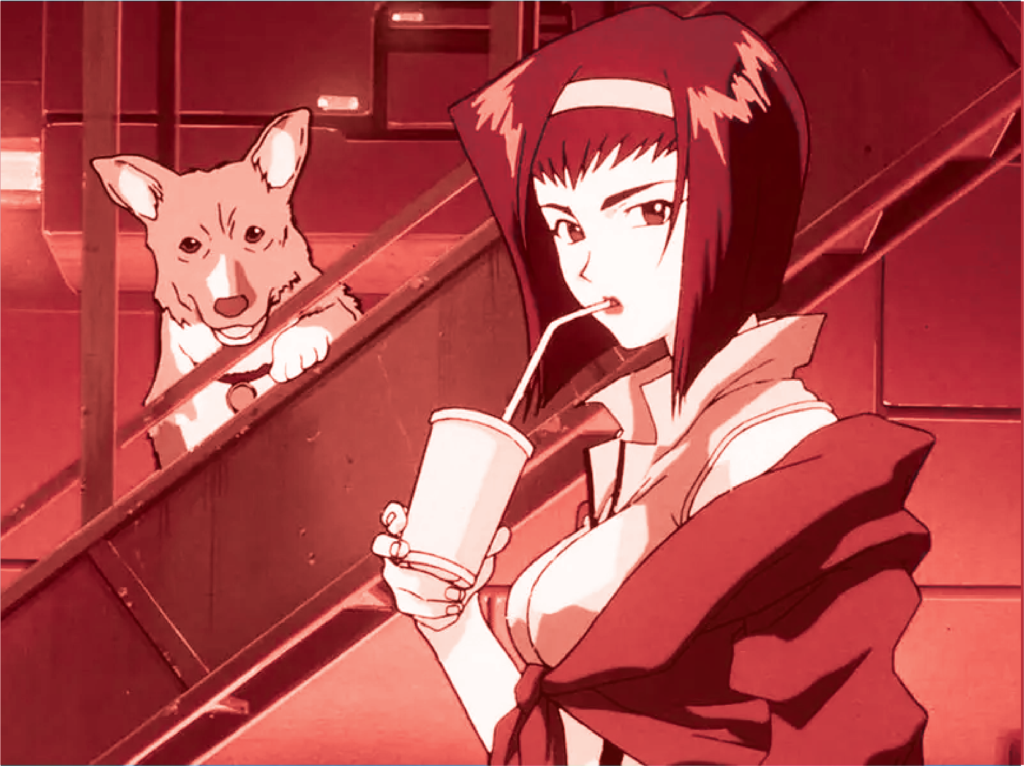
Faye is the most explicit. She wakes up into a life she doesn’t recognize, but instead of creating something new, she spends her time trying to reconstruct what she lost.
And Ed, a little addition to the ship, is chaotic, present, unburdened. The only one not tied down by memory.
Which is why she leaves.
The only character capable of growth exits the system.
Everyone else stays.
A Road Spike, Incarnate
At first, Spike reads like the main character.
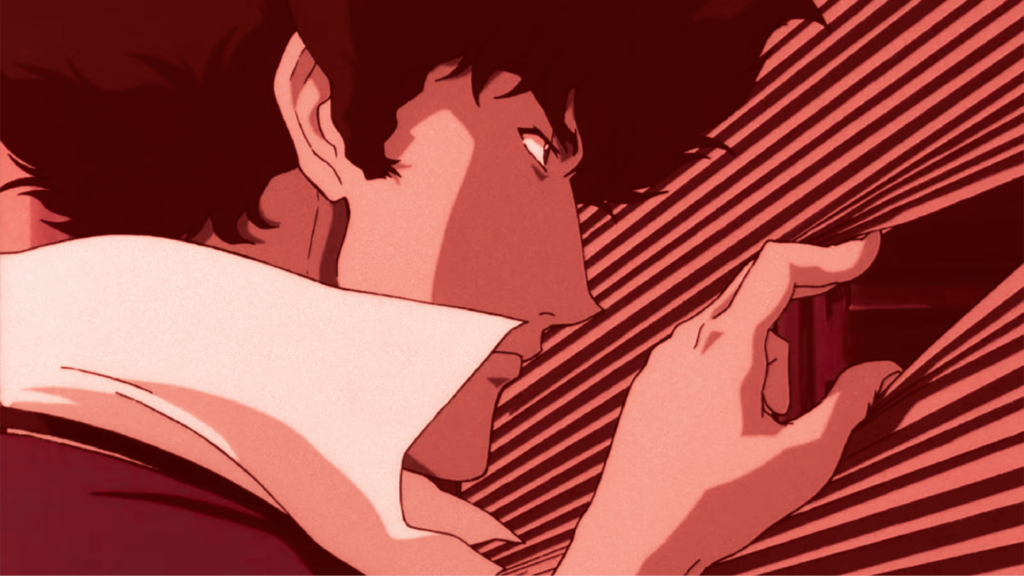
He has the aesthetic.
The mystery.
The past that feels important enough to anchor the story.
But the longer the show goes, the clearer it becomes: Spike isn’t driving anything forward.
He’s pulling everything backward. Every thread that matters leads to the same place – Julia, Vicious, the life he never actually left.
He moves through episodes with competence and detachment, but there’s no sense of construction. No sense that he’s building toward anything new. He’s not chasing a future. He’s circling the drain of his washed up life.
And that changes how you engage with him.
Most protagonists create momentum. Even when they struggle, they’re oriented forward. Spike isn’t.
He’s supposed to be a gravitational center. Yet everything bends toward his unresolved past, including the audience’s attention.
That’s why it feels to difficult to stay locked into his perspective.
Because deep down, you can feel it: There’s nowhere for him to go.
A Show That Can’t Bet on Itself
Part of what makes Cowboy Bebop so distinctive, is constant shifting themes and genres.
One episode feels like noir.
The next leans into western.
Then horror.
Then absurd comedy.
Then something closer to pure melancholy.

My initial read was it was a studio experimenting with form. A showrunner trying things out. A creative team stretching across genres.
And sometimes, those experiments don’t fully land.
But over time, it starts to feel really intentional.
The show doesn’t just change genres for style. It genuinely reflects instability.
Each episode becomes a different version of what the show could be; just like each character represents a version of who they might have been.
But nothing locks in.
Nothing stabilizes.
Nothing becomes a foundation.
Not until the end of the series do we get our resolution.
It’s constant variation without evolution.
And that mirrors the crew perfectly. They change environments constantly, but never transform within them.
Illusory Movement
Moreover, the Bebop travels constantly: new planets, new bounties and situations.
On the surface, it looks like movement.
But movement isn’t the same as progress That crew isn’t going anywhere. They’re just chewing the scenery. And the show reinforces that feeling through its structure.
Each episode feels like an experiment.
Different tones.
Different genres.
Different storytelling approaches.
Sometimes it works beautifully.
Sometimes it feels disjointed.
Sometimes it barely lands at all.
Because the show itself doesn’t want to settle into a rhythm of growth.
It resets. Again and again.
Just like the characters.
The Bebop Isn’t a Home
The ship looks like a home.
There’s a kitchen. Common spaces. Rooms that suggest permanence.
But no one treats it that way.
No one is building a life there.
No one is investing in it as a future.
It’s a place they return to, not a place they belong to.
Meals are shared, but rarely meaningful. Conversations happen, but rarely deepen. People come and go without altering the structure of the group in any lasting way.
The Bebop is functional.
But it isn’t rooted.
It’s not a house.
It’s a holding pattern.
A container for people who aren’t moving forward — but aren’t ready to leave either.
Loneliness Without Collapse
Most stories about loneliness move in one of two directions.
Either the characters find connection, or they break under the weight of isolation.
Cowboy Bebop does something quieter.
It lets people remain alone. Together.
The crew shares space, meals, and occasional moments of vulnerability.
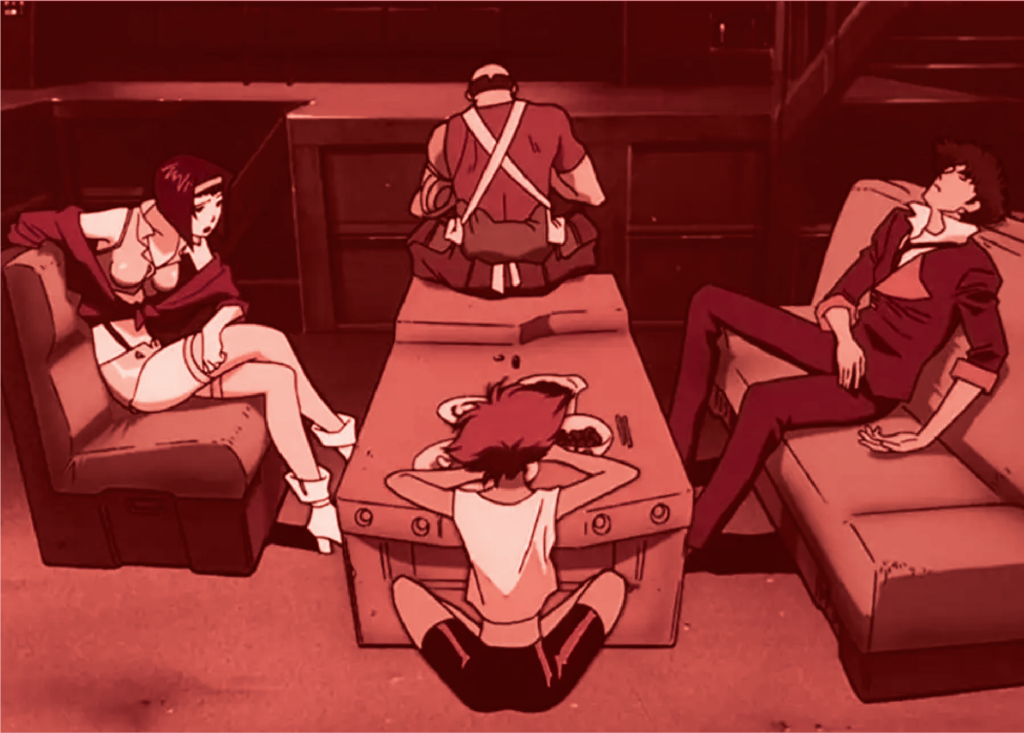
But they don’t fully see each other.
They don’t fully intervene. They don’t fundamentally change one another.
There’s proximity.
Without transformation.
And that creates a different kind of loneliness.
Not isolation.
But distance.
Close enough to avoid being completely alone. Far enough to never truly connect.
Why It’s Hard to Engage With
I found it oddly difficult to engage with at times.
Not because I thought it was confusing or poorly made. The show doesn’t reward the kind of engagement we’re used to.
There’s no steady escalation.
No clear arc pulling everything forward.
No guarantee that what you just watched will matter later.
And I know I’ve said this two different ways already, but that friction isn’t a failure. It’s an essential part of the experience. Because the show doesn’t want you to get comfortable.
Cowboy Bebop wants you to sit in the same space the characters occupy: unresolved, uncertain, and disconnected from forward motion.
It also demands a certain kind of viewing. If you go in expecting momentum, payoff, or transformation, it resists you. But if you meet the show on its own terms, as something to observe rather than resolve – it reveals itself more clearly.
The Shows That Learned a Different Lesson
You can see Cowboy Bebop’s influence in a lot of ensemble storytelling that followed.
The drifting crew.
The mix of humor and melancholy.
The idea that people can share space without sharing direction.
Shows like Firefly borrow the structure, a group of misfits traveling through space, forming a kind of found family.
But where Bebop resists forward motion, those shows often lean into it.
They build relationships.
They create momentum.
They allow characters to evolve together.
Even something like Community, with its genre-bending episodes, uses fragmentation differently.
Each stylistic shift reinforces connection.
Each experiment builds the group.
Cowboy Bebop doesn’t do that.
Its fragmentation isolates.
Its shifts reset.
Its structure prevents accumulation.
And that’s what makes it feel so distinct.
In a strange way, Cowboy Bebop has more in common with Seinfeld than most dramas. Both refuse growth. Both reset. Both keep their characters locked in place. But where Seinfeld turns that into comedy, Bebop lets it sit as something heavier.
Not funny.
Unresolved drama.
A Story About Not Becoming
Further to that end, we’re used to stories about becoming.
Becoming stronger.
Becoming better.
Becoming someone new.
Cowboy Bebop is about what happens when you can’t. Or won’t.
These characters aren’t incapable of change. They’re unable to release what came before.
And because of that, they don’t build anything new.
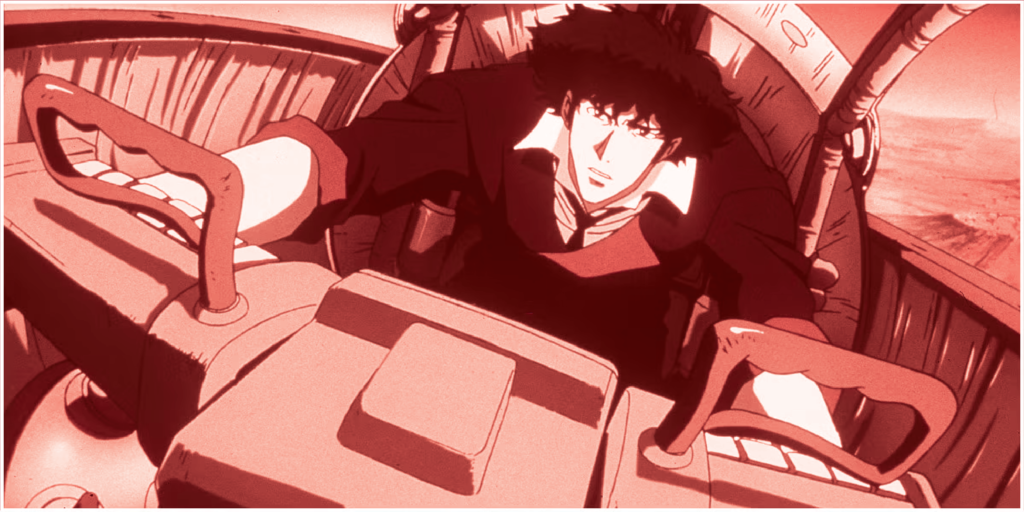
They drift. They survive. They repeat.
Why It Stays With You
That’s why the show lingers.
Because you can feel the potential in every character, and watch it go unrealized.
At some level, it feels familiar.
We all carry versions of ourselves that are hard to let go of. Part of what makes this show so fascinating upon completion is how clearly it presents itself when you stop trying to force it into a familiar arc. It reminded me of a mature Saturday morning cartoon, a distant cousin to Looney Tunes and Tom & Jerry.
It feels familiar because I’ve lived versions of that loop.
Old identities.
Old relationships.
Old expectations about how life was supposed to unfold.
Oriented toward repetition… Never building into what comes next.
Culture Works
We tend to celebrate transformation in storytelling.
But there’s something just as real, and far less comfortable, about stagnation.
About loops.
About drift.
About lives that don’t quite evolve.
Cowboy Bebop documents inertia. And in doing so, it captures something most stories avoid:
The weight of staying the same.
theories Summarized
Yes, not all stories are about change. Some are about the inability to change.
Motion does not guarantee progress.
Survival is not always a growth edge.
The past doesn’t disappear just because time moves forward. If anything, it becomes heavier.
And if you don’t release it… You orbit what’s already gone. Some lives don’t break. They just repeat.
The real folk blues.