
The School You Needed
How to Become a Student of Your Own Life
Have you ever wondered why two people can experience the exact same thing… and only one of them changes?
Millions of people watched the same Spider-Man movie.
Millions of people read the same book.
Millions heard the same song.
Most enjoyed the experience.
A few walked away different.
Why?
That’s the question I couldn’t stop thinking about after writing the first two essays in this trilogy. I started with a strong to understand myself and then to learn to understand others.
The first essay in this trilogy was deeply personal. It asked a simple question:
How did stories teach me to understand myself?
The second essay zoomed out.
Instead of asking what stories did for me, it asked what stories have always done for us.
I argued that every generation inherits the same human questions and translates them into new cultural expressions. Comic books weren’t replacing mythology. They were continuing one of humanity’s oldest traditions.
But both essays left one question unanswered.
Now what?
Both essays left one question unanswered.
How do we become the kind of person who actually learns from life?
If stories can teach us… And culture can preserve ideas… Why do some people spend their entire lives surrounded by meaningful stories without ever changing?
While someone else watches one movie, hears one sentence, or has one conversation that alters the course of their life forever?
The difference wasn’t the story. The difference was what happened after the story.
Which ironically, is why this essay almost didn’t exist.
Build a Little Capital(ism)
I never wanted to be a teacher.
When I started timotheories over a decade ago, I thought I was building a place to write about the things that interested me. Reference material for art. Camaraderie with fellow creatives. And maybe the blog posts would turn into art ideas or possibly networking opportunities to get me further business success.
I told friends and acquaintances that was an artist and a business man. I had selective taste.
Art.
Music.
Movies.
Business.
Culture.
Psychology.
Humanities.
Over time I thought maybe timotheories would become the catalyst that helped artists build careers. Maybe I’d open a gallery. Maybe artist housing. Maybe workshops. Maybe a creative community.

The vision kept changing. Because I wanted to find a way to build a business.
What I couldn’t truly appreciate was the underlying pattern connecting all of it. And looking back, I don’t think I changed directions nearly as often as I thought I did. I thought I was abandoning one dream for another.
An art blog.
A business.
Then e-books.
Then workshops.
Housing.
Then art sales.
Finally community.
It sounds like a capitalistic dream doesn’t it? Build something, to make money, to be useful.
But each version was asking the same question from a different angle. Different expressions of the same idea. I just hadn’t discovered the principle yet.
And that realization also changed how I understood my younger self. And to express that, I have to travel back much further.
One of my best friends in high school was a self-proclaimed socialist that loved Karl Marx, anarchist book fairs, going to punk rock shows, taking public transit, and recycling. Despite the fact that his mom and step-dad were realtors who lived in St. Albert, AB. A known hub of white upper-middle class people.
I lived in the west end of Edmonton, near West Edmonton Mall. My parents owned their own home, and got their four kids through post-secondary without debts, but my dad was the primary breadwinner in an economy where construction work was not regular and he did not move up an economic ladder. So we often felt the pinch of wanting.
Why am I sharing this anecdote?
For many years, I thought my aim was to simply build things. Looking back now, I was looking for ways of seeing, to get me there first. Not teachers in a traditional sense, because I wasn’t looking for someone to tell me what to think. I was looking for people, stories and ideas that helped me understand how to live.
Sometimes I found them in comic books.
Sometimes in films.
Sometimes in music.
Sometimes in biographies or business books.
Sometimes in deep conversations that caught me off guard.
I didn’t consume those things because I was trying to become an expert in pop culture, thought believe me, people have tried to tell me that’s who I am, and for blip, even I thought that might be who I was.
I consumed those things because I was trying to understand myself. I just didn’t realize it at first blush.
From Consumer to Student
I think that’s the part we’ve forgotten how to teach young adults.
We spend our lives consuming experiences.
Movies.
Books.
Music.
Relationships.
Failures.
Successes.
Work.
Travel.
Conversations.
Ourselves.
Every-day life offers us something worth learning from. But almost nobody teaches us how to learn from it. Not how to collect information or to win arguments. How to become someone who is genuinely transformed by experience.
That’s the school I wish I’d discovered along the way to maturity.
Not another institution. Not another credential but a way of approaching life. A place where curiosity mattered more than certainty and where questions mattered more than answers. Where becoming mattered more than performing.
So I decided to build it.
When I was younger, I thought my love of movies and comic books was just entertainment.
Looking back, I realize they weren’t giving me answers. They were giving me better ways of seeing.
Because they gave me somewhere to wrestle with questions I couldn’t yet answer.
Spider-Man distilled responsibility.
Professor X showed me hope.
Magneto exemplified how pain can harden into ideology.
Batman demonstrated that justice and vengeance are not the same thing.
The important realization came much later.
It wasn’t that these characters had the answers. It was that they were helping me ask better questions.
And I also realized something else. I thought I had spent my youth studying movies and popular culture. I hadn’t; I had been practicing how to pay attention. And culture wasn’t the destination. It was where I learned to practice answering the questions life would eventually ask me for real.
That’s a very different kind of education. More like a from of applied wisdom.
The Difference Between Information and Wisdom
Most people believe education ends when school ends. I think education begins when life begins.
Because life never stops teaching. It just stops handing out report cards.
Every day asks something of us.
A difficult conversation.
A failed relationship.
A promotion.
A diagnosis.
A film that won’t leave your mind.
A piece of music you can’t stop replaying.
The question isn’t whether life is teaching you. The question is whether you’re learning from it.

And that’s why one of the biggest misconceptions is about learning. That it’s about collecting information and that after grade twelve (or whatever the last level of primary school is), we’re ready to get into the world.
Information tells us what happened.
Wisdom helps us understand why it matters.
Stories are uniquely powerful because they compress complicated human experiences into something we can emotionally recognize. A good novel lets us wrestle with grief. A film lets us explore courage. A song helps us put words to emotions we couldn’t explain.
They’re simulations.
That’s why we remember stories decades after we’ve forgotten facts. The facts inform us and the stories transform us. The real question is; are we paying attention to what those stories teach us?
Feel. See. Use.
So what does paying attention actually look like? Looking back, I realized I had been repeating the same learning process my entire life without noticing it.
First, something moved me.
A scene.
A song.
A conversation.
A character.
I felt something before I understood it. Then I became curious.
Why did this resonate?
What question was hiding underneath it?
What principle was this story trying to embody?
Finally, I tried to use it by applying said principle. And eventually I realized I wasn’t collecting random insights. I was repeating the same learning model over and over again. So I gave this process a name.
Feel. See. Use.
Not because I needed another framework. Honestly, we could all do without so many of them. But naming this process made it repeatable.
The Adaptation Test
Once you begin looking for principles instead of expressions, you can’t really stop. You start noticing the same pattern everywhere.
Stories.
Idioms.
Religion.
Mythology.
Movies.
Different surfaces. The same underlying questions, which led me to another realization. As I kept practicing this process, something unexpected happened.
I stopped comparing stories.
I started comparing principles.
Everything changed after that.
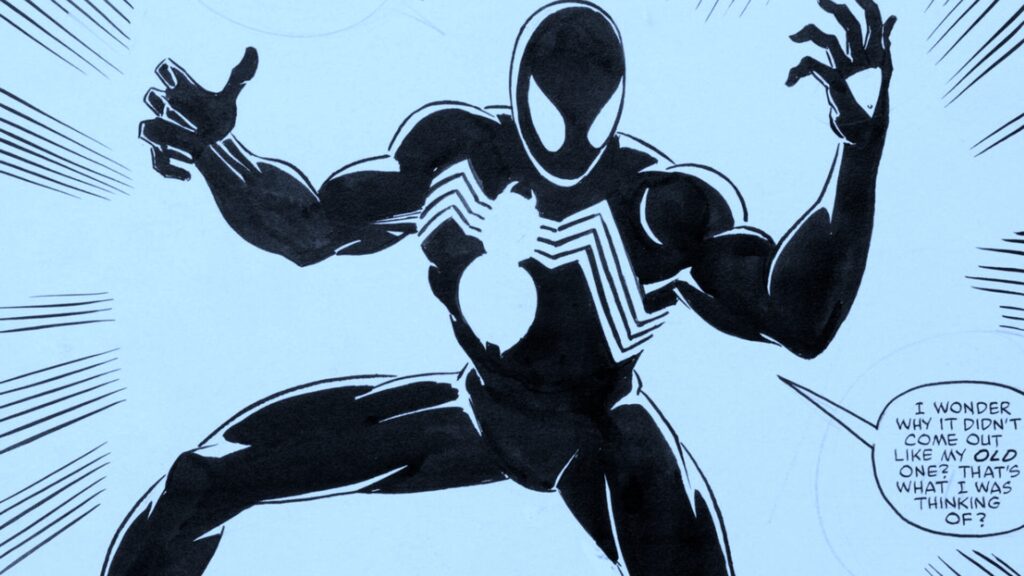
Spider-Man wasn’t just a superhero anymore. He was another expression of responsibility. Batman wasn’t just Batman. He became another answer to justice.
King Arthur.
Professor X.
The same questions kept appearing in different clothes.
That’s when I started asking a new question…
The previous essay (Comic Books and the Stories that Outlive Us) introduced something else I now call The Adaptation Test. This isn’t just a way to evaluate movies or other media. It’s a way to think.
Whenever an idea changes form, ask yourself:
Did the expression change?
Or did the principle?
That single question works almost everywhere.
Business.
Relationships.
Education.
Leadership.
Politics.
Art.
Technology.
The expression will almost always change. The principle shouldn’t have to.
Why School of Thoughts Exists
When I started timotheories, I didn’t think I was building a website, let alone a platform. It was a blog and I wrote about whatever interested me.
Pop Culture.
Psychology.
Business.
Identity.
Art.
Creative interviews.
Local events.
Looking back now, I don’t think I truly understood or appreciated what I was building.
Today I do.
I was building the school I wish I’d found when I was twenty. A place that takes curiosity seriously.
Where stories aren’t disposable entertainment.
Where culture isn’t background noise.
Where asking better questions matters more than easy answers.
That’s why Kuality Talks exists – because we all need help understanding ourselves.
That’s why Culture Works exists – we all need help understanding the world around us.
And that’s why School of Thoughts exists – because understanding isn’t the end of learning.

We also need a way to organize what we’ve learned.
Not so we can win arguments.
Not so we can become experts.
So we can continue asking better questions.
Because the quality of our thinking ultimately depends on the quality of the questions we keep returning to.
theories Summarized
Building Your Own School of Thoughts
Here’s the exercise I’d leave you with. Think of 3 stories that have stayed with you for years.
Not your favourite stories.
The ones you keep returning to.
Now ask yourself:
What question are they all trying to answer?
Don’t compare the characters. Compare the principles.
You might discover, like I did, that you’ve been studying the same question your entire life without realizing it. Every school teaches you something.
Some teach you facts.
Some teach you skills.
Some prepare you for a career.
I hope this one helps you pay closer attention to your own life. The lessons you need have been quietly waiting inside the stories, conversations, failures and experiences you’ve been living all along.
You just needed a way to recognize the lesson.
Welcome to School of Thoughts.