
Cultural Anchors: When The Song Meant Something
I didn’t think it would matter that much.
It was just a song.
Just a moment.
Just one of those things you don’t plan for, but you do it anyway.
But I keep coming back to that memory.
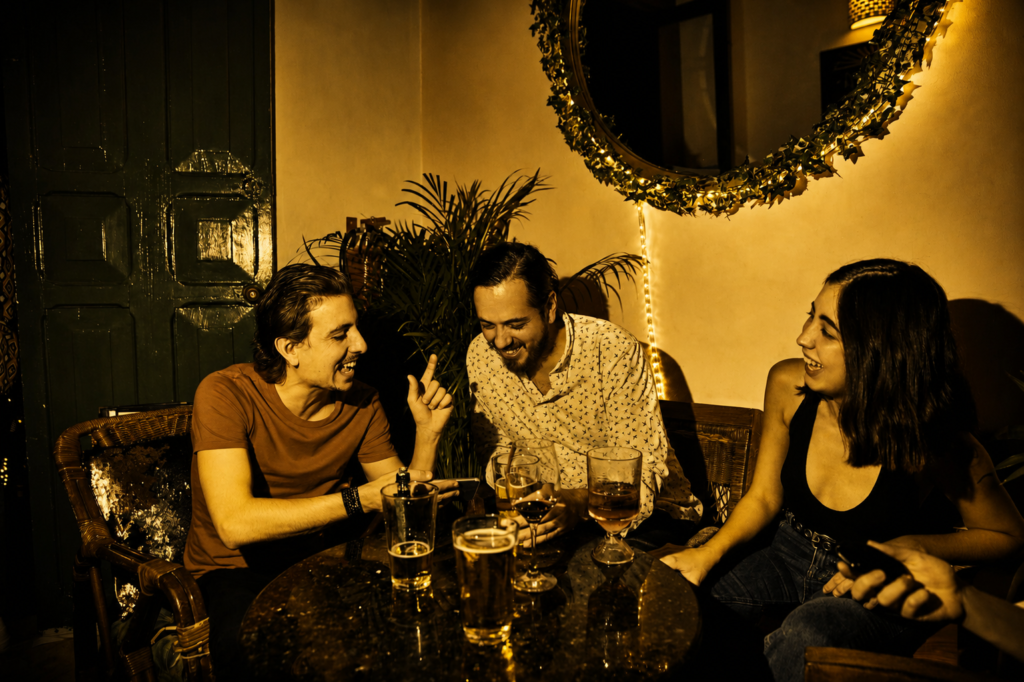
We were singing Bohemian Rhapsody. In the bar, of course. Rob, Nick, Chris and I. Probably after a shift at our shitty retail job. TRU crew baby.
Not casually signing, mind you. Not background noise. Singing to the audience, a microphone in each hand. I later made a painting about it.
The kind of singing where everyone knows the words,
where the timing matters,
where you feel the build before it hits.
“Is this the real life…”
And then suddenly you’re not just singing a song.
You’re inside something. You’re part of an experience, and if you do it right, the whole bar joins in, they start singing along, raising glasses, lighting lighters, belting their collective hearts out to the timeless joy it produces.
I’ve had moments like that before. And since.
With movies.
With inside jokes.
With unencumbered performance.
With the kind of references that don’t need explaining.
You say one line, and the other person just gets it.
It becomes clever because you were both there when it meant something raw.
We were driving around at night on retail wages, drinking cheap spirits and cheaper cigars, wanting something more, but refusing to grow up too soon. And we naively thought the bar patrons were stuck, but looking back on it now, I think they understood something we didn’t yet. And ironically, something our lives seem designed to interrupt now.
Act 2 – The Pattern
That’s the part I didn’t have language for back then.
Why do moments like that stick?
And why do they feel… heavier than they should? When you look back on them anyway.
Because if I’m honest, it’s not just nostalgia for me.
It’s not just that living in the moment and doing things with friends “was fun.”
There’s something else happening when you’re building an identity. Some of the strongest connections in my life aren’t built on big, dramatic events. They’ve built on small, shared ones. Racing shopping carts. Doing cart wheels. Making up games and taking on dares.
And conversations about art, sex, politics, religion. All the taboo topics.
A song.
A scene.
A moment that should’ve passed into the next one – but didn’t.
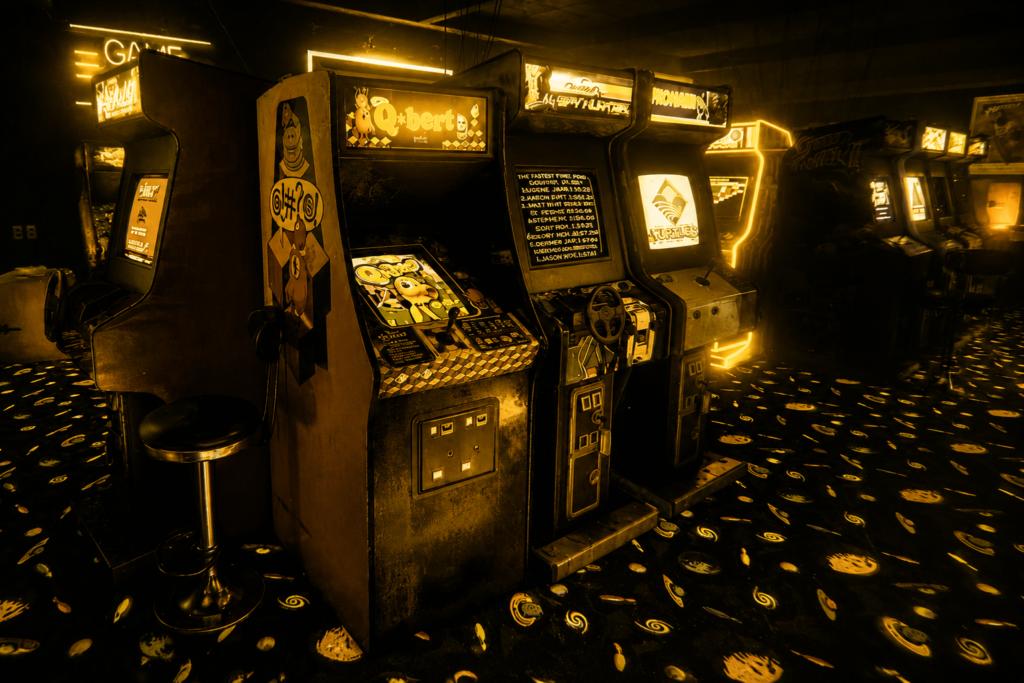
Replaying the same stupid Borat scene over and over again because everyone in the room needed that feeling of exhaustion from laughing till it ached. Or quoting Wayne’s World in the wrong setting but some cool older girl instantly matched the energy, proving we were worthy. Tattoo energy. A cool name for a band. We should totally buy a bar.
And on the flip side…
I can also feel when it’s missing.
When things become routine.
When everything is technically fine, but nothing lands.
When you’re spending time together, but not actually sharing anything.
No moments.
No references.
No anchors.
Just… time passing. Clock in, say good morning. How was your weekend? An automatic smile. Time passes. Have a good night. See ya.
And I think that’s the part that’s been bothering me.
Not the moment itself. The absence of them.
Act 3 – The Drift
Because I’ve had enough of those days and nights – the ones that just pass through me. Like a bowl of ramen.
Where everything is technically fine.
Where you’re doing what you’re “supposed” to be doing. Have dinner, watch something on TV or online or on your phone. And quite simply zone out.
Where nothing is wrong, exactly, but nothing sticks. It kind of sucks.
No lines you come back to.
No shared references that mean anything later.
No moments where you look at someone and realize:
“Yeah. That one mattered.”
And I think I’ve been calling that “normal” for a long time. I watched Weapons alone. What an excellent movie. I loved that movie, but no one to share that one with. My wife was busy, my kid was at work. The cats don’t talk.
And it’s not the same.
It doesn’t feel the same. And I know it’s not supposed to, as we change into different stages of life. But thats also why clubs and groups exist, to talk through those experiences together and build a shared lexicon of memories.
Because when I think about the moments that do stay, they all have something in common.
They weren’t passive.
They weren’t background noise.
They required something.
Presence.
Energy.
Participation.
You had to be in it. You had to be there, as we used to say. When we used to be forced to make small talk. And I hate small talk.
And that’s probably the part I ignored.
Or lost.
Or traded for something easier.
Because it’s a lot simpler to let micro interactions play in the background than it is to actually engage with them.
But damned if I didn’t get some great stories out of awkward as hell interactions with a friends parents after staying over with a girlfriend and sleeping in his sisters room, but he neglected to tell any of us when they were coming home or forewarning his parents that a bunch of friends would be spread throughout the house.
Act 4 – The Anchor
To sit there and watch something instead of simply reacting to it. Quoting it, building on it – making it yours.
But the moments that stick? They’re never passive.
They’re co-created.
And that’s probably why they matter more than it seems like they should. Because they’re not just something you experienced. They’re something you built with someone else. That’s the difference.
Some moments disappear.
Some moments become something you can come back to.
And I don’t think that’s accidental.
Because when I replay that night, of us ordering grasshopper for the umpteenth time,
or that singing that Queen song,
or that stupid, perfect timing of everyone hitting the same note,
what I’m really remembering isn’t the song.
It’s the feeling of being in sync with people I cared about.
Of being there, at the same time,
feeling the same thing,
without having to explain it.
Nick and I have been friends our whole lives, and I convinced him to take a second part-time job at Toys R Us because he was saving money for school and to get a better car… But we made friends with two other guys working there, and for a few years, that was the group. And karaoke was part of our ritual. And while we don’t see either of those guys anymore, whenever we get together and sing karaoke, it transports us back to that time of life.
And maybe that’s why it sticks. Not because it was a big deal. It was actually just another little moment. A shared moment of many.
But maybe Rob running around the bar, and comically ripping the crotch of his jeans while singing Breaking The Law, might have cinched that moment for me. Maybe.
That’s the diamond in the rough.
Little moments that survive time.
Act 5 – Cultural Anchors
We’re expected to treat these things like throwaway moments.
Background noise.
Stuff you put on while you’re doing something else. And the memories are there for filler when you need to reminisce about your youth or when you used to party or when the world was a better place or whatever. Dismissive all around.
But sometimes – that’s actually the thing.
The song isn’t just a song.
The movie isn’t just a movie. He’s not just Ken.
The joke isn’t just a joke.
It’s a marker.
A timestamp.
A way of saying:
“We were here. This meant something.”
And maybe that’s why I keep coming back to it. Actually fuck that. That’s exactly why I keep coming back to it; I’m not stuck in my carefully curated past. Filled with love for 80s hair metal, 90s punk, indie rock, The Fast and the Furious, Ghostbusters, Star Wars, TMNT, Chrono Trigger, situational comedies and comic books. But because I recognize something in it now that I didn’t before.
Because culture gives people shared language for memory.
Shared reference points.
Shared emotional geography.
That’s why people quote movies twenty years later.
Why songs can collapse time instantly.
Why old friends can reconnect through one stupid line from a comedy nobody else remembers.
It’s not really about the nostalgia. The nostalgia is an access point.
It’s recognition.
Recognition of who you were,
who you shared life with,
and who helped shape you while you were becoming someone.
That’s what a cultural anchor actually is.
A shared emotional landmark.
A little moment that survived time.
Some moments don’t just happen to us.They stay.
theories Summarized
Small, shared cultural moments often become emotional landmarks long after the moment itself has passed.
Songs, movies, games, jokes and rituals are not just entertainment; they become symbolic containers for memory, identity and connection. The nostalgia is often just an access point.
What we are really revisiting is a feeling of emotional synchronization with people we cared about.
The moments that stay with us are rarely passive.
They require participation, presence, vulnerability and shared engagement.
Shared cultural experiences become a kind of relational shorthand; a way of saying “you were there too.”
The anchors that survive time are not always the biggest moments.
Often they are the small, strange and emotionally inhabited ones.
And culture matters because it gives people shared emotional geography; reference points that help us remember who we were, who we loved, and who we became alongside them.
Maybe the real tragedy of procedural adulthood is not responsibility itself, but how easily it can strip life of participation, spontaneity and shared meaning. Cultural anchors are not just relics of youth. We continue forming them throughout our lives whenever we fully participate in something meaningful with other people.
The song is rarely just the song.