Personal Maintenance – Your Real Needs
I’ve started to notice something uncomfortable about myself.
I don’t just have “good days” and “bad days.” A cliche that doesn’t truly do justice to what happens when I’m uneven.
I’m either maintaining myself… or I’m not.
And when I’m not, everything feels off. My energy drops. My patience shortens. My creativity disappears. My ability to be fully present with people fades. Conversations feel shallow. Time feels wasted. I feel like I’m operating at half-capacity in a life that’s asking for all of me.
And the fascinating part is that I always know when it’s happening, it’s not this foreign and benign concept for me, where all of a sudden I have “hangry” tunnel vision and begin to lash out.
My world narrows.
My patience shortens.
I start reacting instead of thinking.
Its almost a sixth sense for my own state of being. For a long time, I thought that state was a cruel joke of life. But now I think it’s something else entirely.
I think I’ve actually been neglecting the internal maintenance required to truly function well.
The Clockworks
I’ve spent a lot of time trying to understand myself.
Astrology. Both the western zodiac and bazi feng shui. Numerous personality tests. Psychology frameworks. A pantheon of professional skill assessments. Books. Conversations. Therapy. All of it, and more.
And I don’t think any of that time is wasted.
Those systems and viewpoints give you language. They give you patterns. They give you something to react to. They help you see yourself from angles you wouldn’t find on your own.
But they’re not the answer.
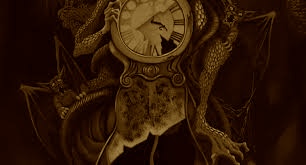
At best, they’re window panes on grandfather clocks. You can see inside, but you’re not actually inside.
Eventually, you have to stop staring at the glass… and start paying attention to what it’s showing you. And walk through it.
Right into the clockworks.
There’s this fantastic scene in the 1982 film The Last Unicorn. Where Schmendrick the magician, Molly Grue and Amalthea (the last unicorn) stand in the great hall of the castle of King Haggard, looking for the Red Bull. The answer comes from a skeleton who will give the way to the Red Bull if they answer his riddle.
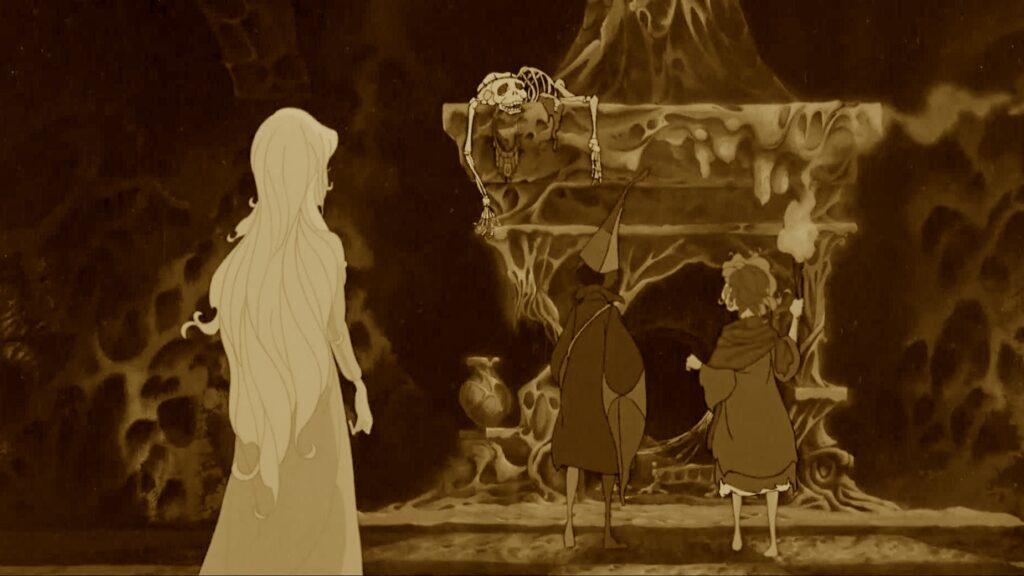
Ultimately Schmendrick tricks the skeleton into thinking he’s turned water into wine, and the skeleton reveals the way through the clock. The important part (read: the ironic part) is that when the skeleton finally explains what they have to do, Schmendrick says “Walk through a clock? What am I, a magician?”
Well yes Schmendrick, you are.
The most interesting part of the clock, is not the clock face or the chime it makes. It’s the clockworks. The part that actually makes it move. They are intricate and beautiful and also a metaphor for the way forward in the story. They represent a pathway.
And for me, that pathway is also a pattern. One that is pretty hard to ignore now.
The Pattern I Can’t Ignore
I need depth.
I need real conversation. Not constant, not performative, but regular enough that I don’t feel like I’m living on the surface of my own life.
I need creative output. Not someday, and not when I have time. Consistently, in some form. Writing. Drawing. Building something.
Thinking something through until it clicks.
I don’t regulate by consuming.
I regulate by making.
I need intellectual engagement. Ideas to wrestle with. Concepts to explore. Something that makes me feel like I’m expanding – not just functioning.
And I need space. Time to process. To literally walk. Time to sit with things without immediately reacting or performing.
I need movement.
Not for discipline.
To get out of my head.
To let my body carry what my mind is holding.
I need challenge. Something to aim at. Something to test myself against. Without that, everything starts to feel flat.

I need clean relational conditions. I don’t do well in environments where I have to pre-edit myself to be understood. That drains me faster than anything.
I need art. Not as a hobby.
As contact.
When I lose contact with art, I lost contact with parts of myself.
Finally, I need play. Something low-stakes. Competitive. Engaging. Because not everything in me wants to be optimized, some of it wants to explore.
When those things are present, I don’t just feel “better.”
I feel like myself.
When they’re not there, I don’t slowly drift into distraction.
I drop.
That’s the part I misunderstood for years.
God’s Honest Truth
At various points on my path, I thought something was wrong with me. That I was too intense, too particular, too hard to stabilize. That I needed to be more balanced, more adaptable, more easygoing, more grateful.
But that wasn’t the issue.
The issue was that I was trying to live without maintaining the conditions that actually support who I am.
People sure talk a lot about “clean living.”
Usually that means:
Eat better.
Move your body.
Get enough sleep.
Those pieces matter. But there’s another layer that gets ignored.
Emotional networks.
Creative hygiene.
Mental input quality.
What are you consuming?
What are you expressing?
What are you avoiding?
What are you neglecting that you know keeps you stable?
The hard truth is this. We expect ourselves to show up consistently in life…
Without consistently maintaining the internal conditions that make that state possible.
We want to be: present, patient, creative, engaged and connected. But we treat the things that support those states as optional. Or worse, as luxuries.
And here’s where it gets even more complicated.
Not everyone runs on the same system.
Some people need routine.
Some people need social time.
Some people need structure, movement, lightness, predictability.
None of that is wrong.
But neither is needing depth.
Or solitude.
Or intensity feelings.
Or creative expression.
The problem isn’t that we’re too different from the program.
It’s that we don’t take the time to look inward and understand what actually maintains us, and then we judge ourselves (or each other) when things start to break down.
I Like Me. The Candy Coating.
I watched a documentary on John Candy recently – John Candy: I Like Me.
He was beloved.
Warm.
Funny.
Generous.
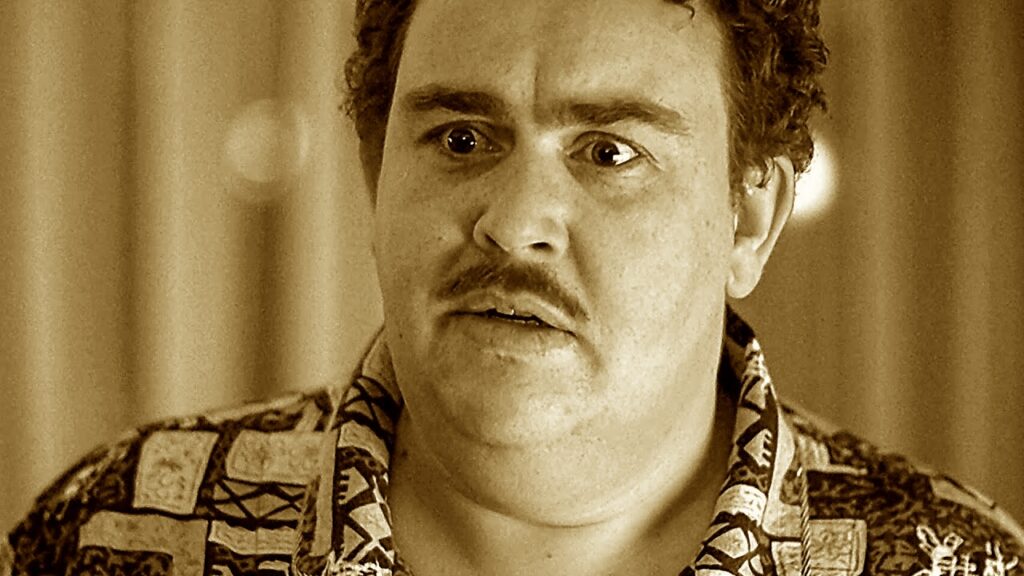
The kind of person people feel good around. And like a lot of people like him… There were things underneath that never really got dealt with in his life.
We’re very good at celebrating the version of someone that shows up.
We’re much worse at asking what it takes to keep them that way.
I’m starting to think that a lot of what we call inconsistency… is just mismanaged maintenance.
Not a lack of discipline.
Not a lack of care.
Just a lack of awareness and follow-through.
On what we actually need to function well.
Understanding yourself isn’t about finding the right system.
It’s about noticing what actually keeps you stable… and choosing to maintain it.
What Maintaining Myself Actually Looks Like
As I’ve identified my needs and values, I’ve started to understand what maintaining myself actually looks like.
Not in theory. In practice.
It looks like this:
If I go a few days without creating anything, I feel it.
Not dramatically at first.
But I get quieter. Less sharp. More reactive.
I start consuming more than I’m expressing.
And everything flattens out.
If I don’t get space |real space| I start adjusting myself. Constantly.
In conversations.
In environments.
I lose the thread of what I actually think.
If I’m not moving – walking, lifting, doing something physical – my mind starts to carry everything.
And it gets heavy.
If I go too long without real conversation, and only small talk, I start to feel like I’m living next to my life instead of inside it.
And if I’m in environments where I have to pre-edit myself to be understood…
I don’t fight it.
I disappear.
And maybe most importantly, it imperative to be in environments where I don’t have to shrink. Where I don’t have to pre-edit myself to be understood. Where I’m not slowly disappearing just to keep things smooth.
When those things are present, I don’t just feel better.
I’m clearer.
More patient.
More present.
I don’t have to force anything.
I just… function.

I feel like myself. And I like me.
What About You?
I don’t think this is just me.
I think most of us have some version of this. Not the same needs – but specific ones. Things that keep us clear, present, creative, connected.
And things that, when neglected, slowly take us offline.
The problem is we don’t always take the time to figure out what those are.
Or we do.
And then treat them like luxuries instead of requirements.
So we try to stay consistent without maintaining the conditions that make consistency possible.
And then we wonder why everything feels harder than it should.
So I’ll ask you directly:
What actually keeps you present?
What do you know, if you’re honest, that you’ve been neglecting?
theories Summarized
One idea. Three functions.
You feel something.
You see it in the world.
You learn how to use it.
Feel. See. Use.
Maintenance works the same way.
Most people aren’t inconsistent.
They’re just under-maintained.
You feel when you’re off.
You see the patterns in your life.
You learn what actually keeps you stable.
Ultimately, this isn’t about building the perfect system. It’s about noticing what maintains you… and choosing to maintain it.