

In Defense of Curation. Foundational Texts.
After “Peak Curation”
I’ve been writing in a public forum for over a decade. Sometimes I write purely from my internal head canon; other times, I have reference material to guide me. But every once in a while, I find inspiration in the world around me, and I go to work with that muse, placing her squarely at the centre of the story.
Some context. I was recently mentioned in a national publication on a cultural topic dedicated to a word I’ve been exploring for years:
Curation.
When I first started timotheories, I was in the process of rebuilding. I had just come through a difficult chapter of my life, and I began writing about the artistic experience as a way to make something useful from the fracture. It wasn’t a perfectly noble vision. It was simply honest.
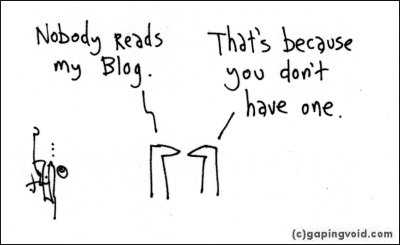
I started a blog, because I wanted to write about the highs and lows of an artist’s journey. This cartoon is an artifact of that moment in time.
For those who are unfamiliar, I am a marketer by day, but an artist by training and education. I studied art history and fine arts in university. The word curation, to me, did not originate in marketing decks or social media captions or banal projects that I wanted to inject life into. It came from museums. From exhibitions. From the stewardship of objects and ideas across time.
So when I use the word in my writing, I am pulling from that lineage.
I’m pulling from the art historical significance of a curator, museums, exhibitions and the sale of fine art. A curator finds, selects, organizes, and presents works with intention. A curator shapes context. A curator builds meaning through exclusion as much as inclusion.
When a word you’ve studied and built upon for years is declared hollow, you pay attention.
You don’t shrink from that.
You step into it.
Not angrily.
Not theatrically.
But fully.
The Fatigue.
In a recent essay for The Spectator, Justin Marozzi asked “Have we reached peak ‘curation’?,” arguing that the word has descended into a “hellhole of meaninglessness.” I was cited in that piece, though the reference itself is secondary to the broader claim.
The frustration is understandable.
When every minibar, playlist, capsule wardrobe, and newsletter claims to be “curated,” the term begins to feel inflated beyond recognition.
Semantic fatigue is real.
But fatigue is not the same thing as conceptual death.
Language does not lose meaning because it is overused.
It loses meaning when it is used carelessly.
There is a difference.
What I Mean By Curation.
Curation is disciplined selection in service of meaning.
Not decoration.
Not aesthetic clustering.
Not algorithmic sorting.
It is judgment. Predicated on grounded history and attentive to how a subject has evolved with time.
It requires knowledge.
It requires taste.
It requires exclusion.
The curator does not merely assemble.
The curator decides.
Historically, curation has been tied to responsibility. The responsibility to preserve, contextualize, and elevate. To mediate between creator and audience. To determine what enters the room and what does not.
When the word drifts into shorthand for “I picked some things I like,” the irritation is understandable.
In earlier years, I used the phrase “digital curating at heart” as a tagline for this timotheories platform. It was an invitation into a broader conversation about stewardship, taste, and creative responsibility.
Taglines evolve.
Principles do not.
The solution is not abandonment.
It is discipline.
The Drift.
When a word becomes fashionable, its most superficial applications inevitably eclipse its disciplined ones. “Curate” is now applied to anything arranged with mild intention or aesthetic preference. The word has been flattened into aesthetic suggestion.
Flattening a word doesn’t erase it.
It signals that something powerful within it is being mishandled.
The English “curator” derives from the Latin curare — to care. It required exclusion as much as inclusion. It was never synonymous with arrangement. It was custodianship.
To curate was to care for something on behalf of others.
That meaning has not vanished simply because modern commerce discovered it.
What Is Actually At Stake.
When language collapses, creative agency follows.
If curation becomes meaningless, then selection becomes casual.
If selection becomes casual, taste becomes passive.
If taste becomes passive, culture becomes noise.
Curation, practiced seriously, is an act of empowerment.
Creatives curate their influences.
Businesses curate their talent.
Audiences curate their attention.
Each act of selection shapes the culture that follows it.
Not trend-chasing. Stewardship.
Words decay when standards decay. When everything becomes “content,” everything becomes interchangeable. Precision feels pedantic. Judgment feels exclusionary. Care begins to look self-serving.
But culture without selection is undemocratic — it’s chaotic.
Curation, in a serious sense, is not branding language. It is a responsibility. And it is choosing what deserves preservation. It’s also forming a canon in miniature.
Most importantly, it is saying, quietly but firmly: this matters. And not everything does.
We have not reached “peak curation.” We have reached peak distraction.
And distraction is precisely why curation matters.
Selection Is Not Narcissism
There is a difference between shouting into the void and preparing an armoury for an argument.
Curation, when properly understood, is the latter.
We live in an age of infinite content. The canon has dissolved. Gatekeepers have been replaced by feeds. Selection is no longer scarce; attention is. In such an environment, choosing carefully is not ornamental. It’s how taste is formed, how identity is shaped, how culture resists entropy.
If anything, we are not even suffering from peak distraction. We are suffering from peak accumulation.
On Being Cited.
I write this not as a distant observer, but as someone whose own work was cited in a larger argument about the word. If the word is under scrutiny, so is anyone who has used it with intention. I am comfortable with that.
Misuse does not invalidate a discipline. It reveals how many are attempting it without rigor. Imitation does not negate mastery.
Polemic compresses. Discipline expands.
If a word has been abused, the solution is not execution. It is restoration.
theories Summarized.
Curation has not peaked.
It has been diluted.
- Curation is not aesthetic clustering; it is disciplined selection.
- Fatigue with a word does not equal the death of its meaning.
- The word carries historical weight tied to responsibility and stewardship.
- Language discipline protects creative agency.
- Creative empowerment requires intentional selection — of influences, collaborators, and ideas.
And dilution is not our destiny.
Words deserve stewardship.
Culture does too.
And I intend to protect both.