
Identity Debt: When You Keep Becoming Instead of Deciding
Have you ever felt strangely haunted by versions of yourself that never actually existed?
The entrepreneur you almost became.
The artist you promised you’d return to.
The disciplined version of you that only lived for a few months.
Each unfinished identity leaves a small imprint. And over time, those imprints accumulate.
It’s because every new interest, persona, or project creates a kind of debt if it’s not properly integrated. Modern culture celebrates reinvention, but it doesn’t include warning labels about what happens when the reinvention doesn’t hold.
New career.
New mindset.
New identity.
We’re encouraged to constantly update ourselves like software. Version 2.0, followed by version 3.0. And so on.
Identity isn’t supposed to behave like software updates. It’s something you refine over time. And when every new version stays active, running in the background, taking up memory, something subtle begins to happen.
Your life fragments.
That fragmentation is identity debt.
People think they are evolving. But often they are simply stacking identities they never finished becoming.

Every identity you start carries an implicit promise.
The entrepreneural you sits hunched at the desk, head in hands.
The artistic you stares at the pile of supplies and unmarked paper.
The intellectual you hovers in your library of unread books.
Each one hums quietly in the background.
Not loudly or dramatically.
Just enough to whisper: “Don’t forget about me.”
Over time, those whispers accumulate.
Your attention splits.
Your confidence erodes.
Your sense of self becomes crowded.
In other words, you never finished integrating the identities you started.
The Psychological Cost
Identity debt doesn’t just create confusion. It creates a quiet emptiness.
Each unfinished identity generates an open loop in your mind.
A leader who hasn’t stepped forward.
An artist who hasn’t created.
A writer who hasn’t written.
Each one also quietly consumes energy. Your brain keeps a ledger of who you said you would become, and it audits that ledger at the most inopportune of moments. And the longer those identities remain unresolved, the heavier that ledger becomes.

Eventually, that balance shows up as fatigue. Existential fatigue.
Integration Instead of Accumulation
I’ll say it a different way. A stable identity is not rigid, it evolves.
Evolution requires continuity.
The strongest identities are not the ones that constantly change. They are the ones that integrate new experiences into an existing structure. The architect does not demolish the entire building every year. They expand it or they refine it.
A life built this way feels different.
Less performative.
Not because fewer possibilities exist.
But because the person inhabiting them has chosen who they are becoming.
The Delusion of Reinvention
Growth has become synonymous with constant change.
We celebrate pivots.
We admire reinvention.
We tell people to “become whoever they want to be.”
But real growth rarely looks like endless transformation. It looks like integration.
Identity should behave more like architecture than fashion. When identity debt accumulates, it doesn’t look dramatic.
It often looks like a busy, curious life. But internally, the experience is different. Your mind feels crowded, like a museum of poorly curated artifacts.
You are:
- interested in everything
- committed to nothing
- emotionally fragmented
Every unfinished identity occupies a small piece of mental real estate. Every abandoned version of yourself becomes a quiet comparison to the outside world.
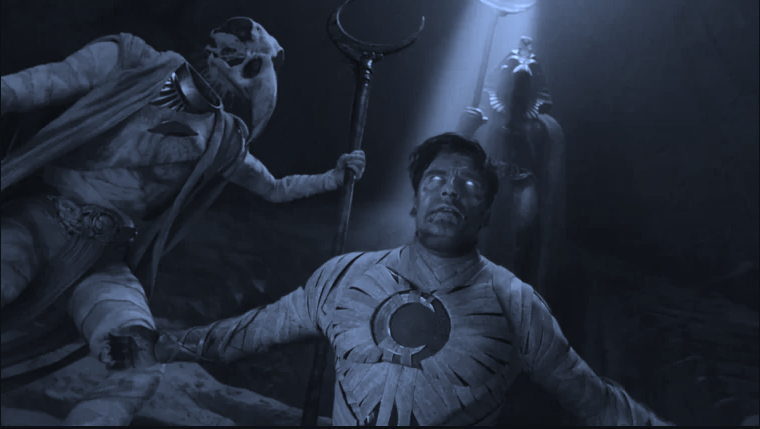
And eventually you start feeling split between those versions of yourself that never fully existed.
The Cultural Interest Rate.
It’s not entirely your fault.
Modern culture quietly encourages identity accumulation.
Social media rewards identity performance.
Hustle culture celebrates the constant expansion of roles.
The worst offenders are those who purport personal brand culture. They encourage the construction of identities that feel impressive, even if they are inherently unfinished.
Self-optimization tells you that if you’re not constantly upgrading yourself, you’re falling behind.

The result is predictable.
Everyone is encouraged to become mere versions of themselves.
Few are encouraged to finish becoming one.
The Correction
Accumulated identity debt doesn’t require another reinvention. It requires resolution. Not every version of yourself needs to be abandoned.
They do need to be integrated or released.
Identity is not meant to expand endlessly. It’s meant to cohere. Because a stable self isn’t built by becoming more people, it’s built by deciding which parts of you belong together.
Integration means choosing and committing to your truth.
The entrepreneur may stay.
The artist may stay.
The thinker may stay.
But they must begin to share the same structure – the same life and priorities.
Otherwise they remain separate identities competing for attention. Moreover, the goal isn’t to eliminate curiosity. Curiosity is healthy. Curiosity is how people grow. Curiosity without integration creates identity sprawl.
And identity sprawl eventually becomes identity debt.

Real growth always feels quieter than reinvention. You finally stop redesigning the whole house every year. You finish rooms. You reinforce beams. You decide which spaces you actually live in and which are meant for seasons and reasons.
Over time something subtle changes. Your mind becomes less crowded.
Your attention becomes deeper.
Your identity begins to feel less like a collection of experiments…
and more like a structure you inhabit.
You are meant to become one person deeply.
That does not mean abandoning curiosity. It means allowing curiosity to feed a coherent identity rather than fragment it.
Integration means asking an important question.
“What parts of myself am I willing to finish building?”
Identity isn’t discovered in constant reinvention. It isn’t a set of parts competing for attention. It is constructed through commitment and completion.
theories Summarized
Identity debt happens when you start becoming many people, but finish becoming none.
Modern culture encourages constant reinvention.
But identity is not software.
It is architecture.
Real growth does not come from endlessly changing who you are.
It comes from integrating what you have already begun. And the strongest lives are not the ones with the most versions of themselves. They are the ones where those versions were finally brought together.
A stable identity is not narrow.
It is intentional.
It is built through commitment.