
Content Streaming Broke the Ritual.
You have to wonder.
Did we really think removing every barrier between us and entertainment would make us more connected?
Streaming promised freedom. Watch what you want. When you want. As much as you want.
No schedule.
No waiting.
No friction.
It felt like progress when it was first available to us. But progress toward what?
Before streaming, television had a clock. Thursday meant something. Sunday meant something. You watched the episode. You waited. You talked about it. You lived in the space between.
It wasn’t just programming; it was ritual.
I almost yearn for a time when weekly programming felt restrictive. When we thought the schedule was the problem.
But the schedule wasn’t control. It was cadence.
Ritual does more for culture than we like to admit. Now, instead of gathering around a shared timeline, we scroll through personalized feeds; each of us alone with an endless stream, shaped by an algorithm that optimizes for attention, not cohesion.
Culture Works.
We optimized convenience.
We removed the schedule. Removed the waiting. Removed the friction. We replaced collective timing with personalized feeds and on-demand abundance.
It worked. For a while.
We can watch anything at any time. Entire seasons in a weekend. Entire eras in a month.
But in optimizing for convenience, we quietly devalued cadence.
Ritual requires schedules.
Timing requires waiting.
Limits require friction.
When everything becomes available at once, nothing asks us to gather. Nothing forces anticipation. Nothing stretches a story across time long enough to embed it into culture.
Shared cultural moments are rarer now, not because stories are worse, but because timing is fractured.
“Barbenheimer” felt electric precisely because it recreated ritual. A shared weekend. A shared decision. A shared timeline. In earlier decades, that wasn’t a fluke. It was a common experience.
The fact that I’m still pointing to “Barbenheimer,” a weekend from the summer of 2023, should be a tell. Shared moments fell rarer now because the conditions that once made them common, are thinner.
Streaming didn’t break television.
It broke the ritual.
And ritual is what turns media into memory.
There Was a Time When TV Had a Clock.
There was a time when everyone watched the same show on the same night. TGIF.
Thursday meant something. Sunday meant something. The episode aired, the credits rolled, and then you waited. A full week.
The next day at work or school, you talked about it. You speculated. You argued about what might happen next. You lived in the gap between episodes.
There was tension in the waiting. There was theory-crafting. It was rhythm.
Streaming didn’t just change how we watch television. It changed when we watch it. And that shift quietly reshaped culture.
Television once operated on a shared timeline. There was a cultural present tense. A sense of “this is happening now.”
The clock synchronized us. It created collective anticipation. It stretched conversation across days instead of collapsing it into a single sitting.

When an episode ended, the story didn’t disappear. It lingered. Speculation filled the gap. The narrative continued, not on screen, but between people. We wanted to know if the Green Ranger would win. If Sam would end up with Diane. If the Scranton branch would close.
The schedule wasn’t just a distribution model.
It was a container for collective experience.
Waiting Wasn’t the Problem.
Waiting was structure.
The week between episodes did real work. It built anticipation. It let tension breathe. It gave stories time to echo. It forced conversation to stretch beyond a single sitting.
Weekly television created friction, but it was friction in the right direction.
When you binge a show in three days, you consume the story.
When you wait, you metabolize it.
Now we get:
- Entire seasons dropping
- Autoplay
- No shared stopping point
- Personalization instead of synchronization
- Conversation collapsing into spoilers and speed
It feels hollow because there are fewer shared stakes. Fewer opportunities to collectively scrutinize and debate.
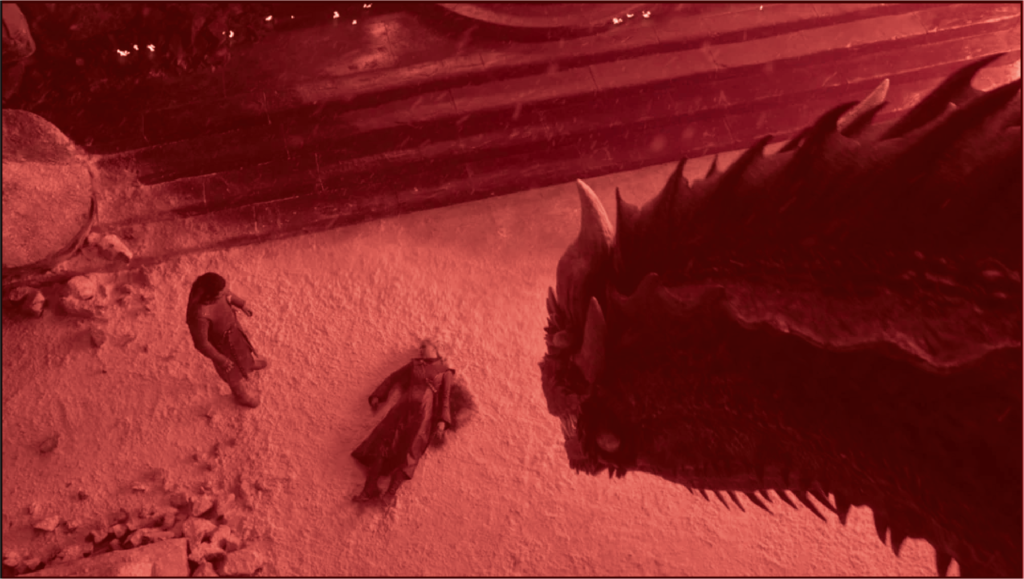
When Game of Thrones ended in 2019, the finale became a cultural event. Not because it was perfect – but because we all experienced it together. The disappointment was communal.
Contrast that with more recent finales, like Stranger Things. Even when they stumble, the reaction fragments. Some finish in a weekend. Some stretch it out. Some never start at all.
The landing may be botched, but the collective reckoning rarely materializes the same way. That difference matters.
This Isn’t a Crying Game.
This isn’t an argument for rabbit ears and cable boxes. And it is absolutely not a bid for more commercials or network executives.
It’s about cadence. About the way time structures meaning.
Technology improved access. But access isn’t the same thing as shared experience.
And shared experience isn’t accidental.
It’s intentional and always requires design.
Ritual Is a Design Principle
Ritual isn’t limited to television.
It’s why holidays matter.
Why premieres feel different than rewatches.
Why live sports still dominate culture.
Scarcity creates attention.
Timing creates anticipation.
Shared timing creates memory.
When everything is available at once,
nothing feels urgent enough to gather around together.
theories Summarized.
We thought waiting was inefficiency.
It was architecture.
We thought friction was the enemy.
It was structure.
We thought convenience would connect us.
It fragmented us.
Streaming didn’t destroy television.
It dissolved its clock.
And culture is built on clocks.