Growing With Things
At some point, we’re supposed to grow out of things. Apparently. But I’m not entirely sure when this happens.
There isn’t a ceremony.
Nobody comes to your house on your eighteenth birthday and confiscates your action figures. There isn’t a government department responsible for making sure you have replaced your Pokémon games with an appropriate interest in mortgage rates.
But the expectation is there.
We grow out of toys.
We grow out of cartoons.
We grow out of imaginary worlds.
We grow out of games.
We grow out of a lot of the music we listened to when we were young.
We grow out of fandom.
Eventually, all those things are supposed to become artifacts from a previous version of ourselves.
Things we used to like.
And if they don’t? Well, in the moments when we get caught off guard, we feel strangely compelled to explain ourselves.
Full disclosure, I still love Lord of the Rings. But it’s not just some fantasy story. Tolkien was a scholar. He created languages. There’s mythology and theology and an exploration of industrialization and mortality and friendship and war and… Whoa.
Why am I defending Lord of the Rings?
Why does it need defending?
More importantly: Why does my continued attachment to something require that thing to prove it deserves an adult’s attention?
Because we don’t apply this rule consistently. Tell someone you’ve loved the Beatles since you were twelve and nobody thinks you’ve failed to mature. Tell them you’ve supported the same hockey team since childhood and you’re loyal.
Make your grandmother’s Christmas recipe every year and that’s tradition.
Read Shakespeare throughout your life and you’re cultured.
But there are other things where lifelong attachment gets interpreted differently.
You’re still into Star Wars?
Still playing those games?
Still collecting those toys?
Still watching cartoons?
Still reading fantasy?
And maybe the problem isn’t the things.
Maybe it’s how we’ve been taught to think about growing up.
Because I’ve started wondering whether growing out of things is actually the only way we’re supposed to grow.
What about the things we grow with?
The Ratty Teddy Bear
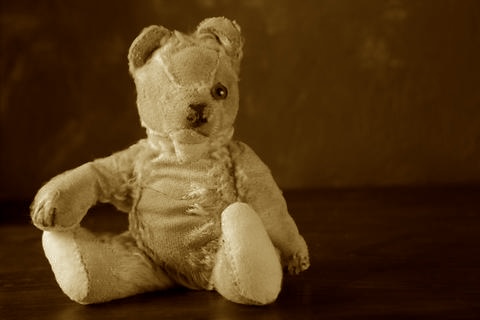
Imagine I introduce you to someone who is sixty years old. And sitting on a shelf in their bedroom is a battered Winnie-the-Pooh teddy bear.
The fur is worn.
One of the ears has been repaired.
And Pooh is missing an eye.
They’ve had it since they were a kid.
Maybe your first reaction is sentimental.
Maybe it’s sweet.
Maybe you think it’s a little childish.
Maybe you’re wondering why a sixty-year-old still needs a teddy bear. Fair enough.
But now I’ll tell you more.
The bear originally belonged to their grandfather. And the missing eye became a family inside joke because their grandfather had lost an eye during the war. Eventually the bear was given to their father, and then to them. Their father died when they were pretty young.
Suddenly Pooh isn’t merely a stuffed animal.
He’s an heirloom.
And maybe there’s more. They grew up watching The Wonderful World of Disney with their family. Later they watched the Disney Afternoon with their young kids. Pooh became connected to those memories too. And as they grew older, they started revisiting and understanding the Many Adventures of Winnie-the-Pooh stories differently.
Friendship.
Curiosity.
Kindness.
Patience.
Different personalities somehow making room for one another.
Now this beat-up teddy bear contains generations of family history, grief, childhood, siblings, stories, values and memories.
You probably don’t care anymore that they’re sixty and still have a stuffed animal.
But there’s a problem with my story. I made the whole thing up.
There is no grandfather.
There is no dead father.
There is no one-eyed Pooh.
I kept adding significance until the teddy bear became respectable. And I think that’s worth noticing.
Because apparently I’ve had him since I was three and I love him wasn’t enough.
Why not? Why does someone’s beloved teddy bear owe me an explanation? Who the hell am I to decide whether the thing someone has carried through their life contains enough meaning to justify carrying it a little farther?
Maybe it’s not an heirloom.
Maybe nobody died.
Maybe there’s no fascinating symbolism.
Maybe the entire story really is: I got him when I was three. He made me happy. He still makes me happy.
Perhaps that should have been enough of a story from the beginning.
My Teddy Catches Ghosts
I have one of these objects. Mine just happens to be a 1984 movie about four guys in New York starting a business catching ghosts.
I’ve loved Ghostbusters for almost as long as I can remember.
And I mean that literally.
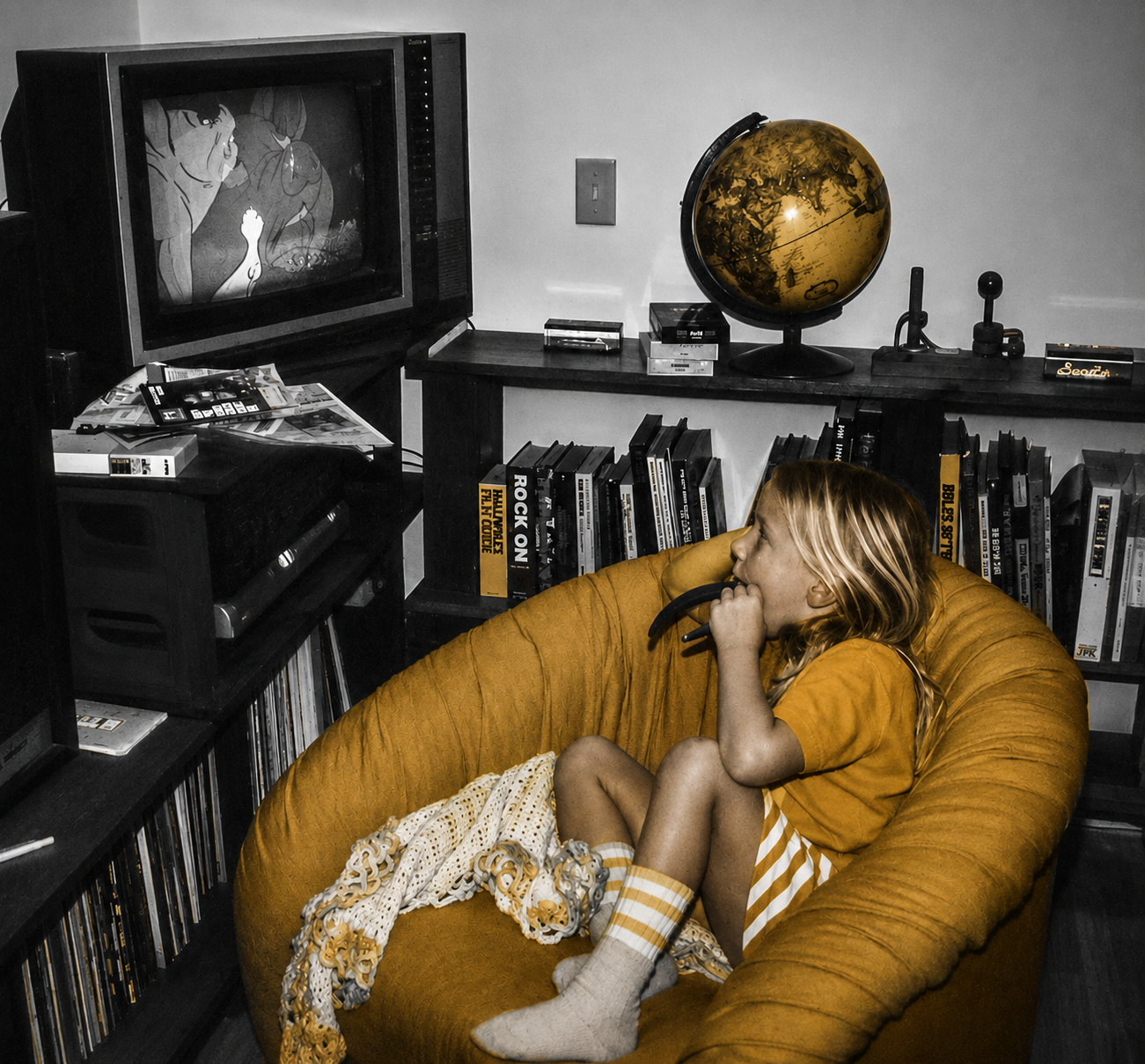
There’s an old family video of me around three years old at Christmas. The Real Ghostbusters cartoon had come out year or so earlier, and apparently somebody understood the assignment. That a true 1980s Christmas was about committing to a theme so this kid felt like they were dropped into the toy factory and got to take one of everything.
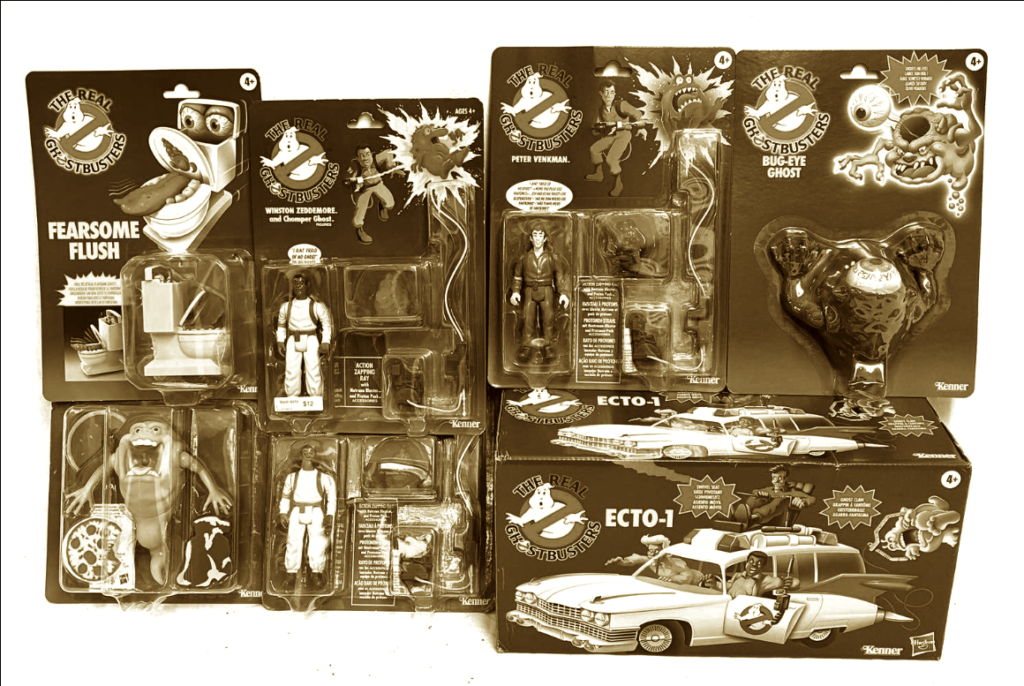
Because you can see in the video that I received the entire catalogue of Real Ghostbusters action figures. And I am losing my fucking mind.
Pure joy.
The kind of joy adults spend enormous amounts of money trying unsuccessfully to manufacture nowadays.
My parents still talk about it occasionally.
Fortunately they don’t have to rely on memory. We have the tape.
There is tiny Tim, on film, absolutely overwhelmed by how amazing it is that these little plastic Ghostbusters are now mine. And yes, that is the first and last time you will ever witness me refer to myself as tiny Tim.
But more importantly, something strange happens when I watch that footage now.
Obviously I remember loving Ghostbusters.
But I’m also watching my parents watch me.
My joy gave them joy.
So now the memory doesn’t belong entirely to me anymore.
It’s one of those little pieces of family mythology.
“Remember how excited Tim was about those Ghostbusters toys? He kept chanting, Ghostbusters! Ghostbusters!”
Yes.
We literally have receipts.
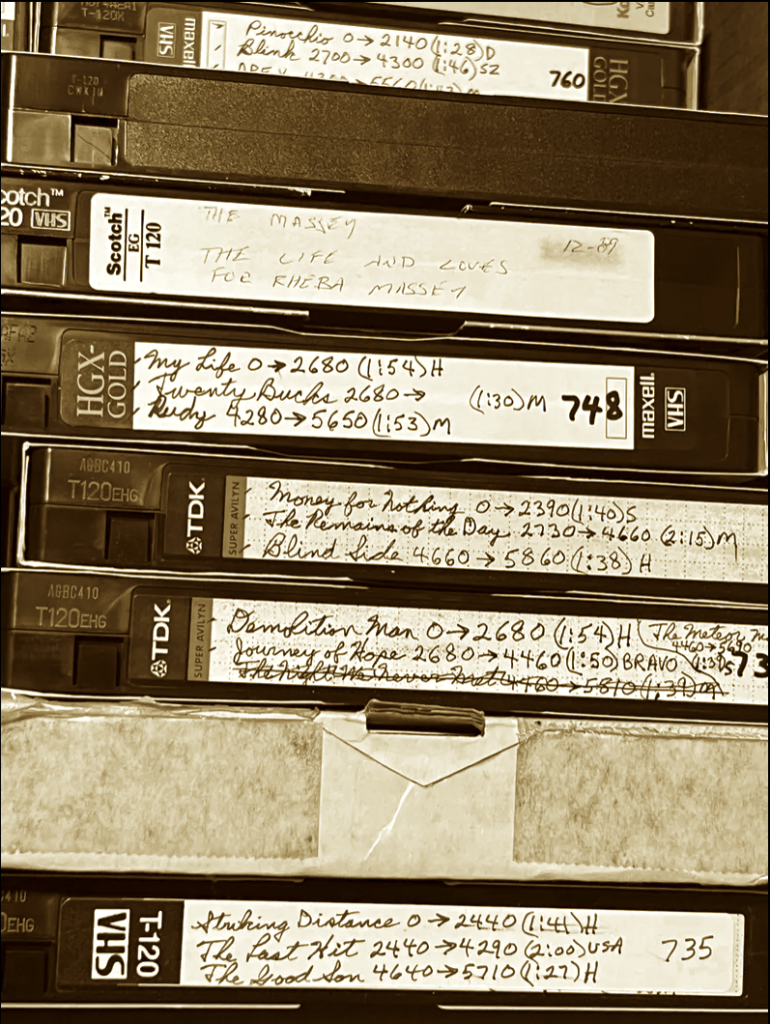
Except the receipt is a VHS tape. Which adds another layer.
If the light is green, the tape is clean
Because for much of my childhood, we didn’t actually own Ghostbusters.
We had recorded it off television. That was normal in my family.
My grandfather had hundreds of movies recorded onto VHS tapes. He was constantly taping things for his grandchildren. My dad did it too.
If something came on that one of the kids might like, somebody recorded it.
Which means that old copy of Ghostbusters now connects me to something else entirely.
My grandfather.
My dad.
A particular way families used to create and share culture.
Somebody seeing something on television and thinking: Tim would like this.
And pressing record.
I watched that particular recording so many times that I remembered the commercials. Think about that for a second. The commercials became part of Ghostbusters. At least my copy of Ghostbusters.
Do you want some coffee, Mr. Tulley?
Years later, when I finally owned the movie on DVD, I discovered scenes I didn’t knew were there. For example, there’s a sexual dream sequence involving Ray and a ghost that had apparently been cut from the television version.
I had no idea it existed. And frankly I shouldn’t have.
But that’s not really the point I want to make. I’d seen Ghostbusters dozens of times. Except apparently I hadn’t. I’d seen my family’s Ghostbusters.
The television edit.
The recorded version.
The version with those commercials.
The version sitting on a VHS tape in our house.
Technically, the DVD was a better quality copy.
Better picture.
Better sound.
No commercials.
Complete movie.
But it wasn’t my copy.
A better object is sometimes the wrong object. Kind of like replacing that ratty teddy bear with an identical one but giving it fun backstroy. You haven’t restored anything, but you sure have replaced it.
Safe Ghosts
Ghostbusters also became one of the movies I’d watch when I was sick.
I found it comforting.
Which is funny because I also found it scary and parts of it remained scary until my 20th viewing. That combination still makes sense to me. Scary, but safe.
There were ghosts.
There was “end of days” danger.
There was the jump scare from the librarian.
There were demon dogs.
There was a giant marshmallow man destroying New York buildings.
But there were also jokes. And Bill Murray. Four weird guys who didn’t knew what to do when the scary thing showed up. But that would peacefully go to jail if they were wrong about their hunch.
Fear existed inside a world where someone could handle it.
Maybe that has something to do with why horror and comedy remain two of the genres I return to when I want comfort. Maybe not.
I don’t need Ghostbusters to explain my entire personality. And its also not the point of the essay, right? Right.
But I do find it interesting that something I found comforting at three can still tell me something about what I find comforting now. And that’s where this gets stranger.
Because I don’t watch Ghostbusters the same way anymore. As a kid?
Ghosts.
Proton packs.
Ecto-1.
Slimer.
Now I notice the people. They’re weirdly complementary.
Venkman is charismatic and irreverent.
Ray is enthusiastic about the occult and mechanics.
Egon is cerebral. But oddly sweet.
Winston arrives as the outsider and often becomes the grounded one. And he gives great one liners.
Dana Barrett is… Kind of incredible all around
They build something together. They’re different people who somehow function better as a unit. They create their own little world with a firehouse, an ambulance, jumpsuits, unorthodox equipment and rituals.
Inside jokes.
Shared purpose.
A strange little family built around something none of them could have built alone.
Which sounds familiar.
I’ve spent a lot of time lately thinking about belonging, community, hearths, shared purpose and the kinds of people who create places where other people can belong.
And apparently one of the stories I’ve been carrying around for almost forty years contains some of that too.
Did three-year-old me understand that? Of course not.
Did three-year-old me recognize something before I had language for it? Maybe.
I can’t prove that.
But I also don’t think I need to.
Because the more interesting thing isn’t whether Ghostbusters secretly programmed my worldview. It’s that the relationship kept changing. The movie stayed relatively stable, but I grew up.
We Keep Treating Meaning Like It Has an Expiration Age
I think this is where “growing out of things” starts bothering me.
We often seem to assume that the meaning of something remains attached to the age we were when we encountered it.
You loved Pooh when you were five? Childhood thing.
You discovered Pokémon at ten? Childhood thing.
You fell in love with Lord of the Rings at thirteen? Teenage thing.
But why should the meaning remain frozen at the moment of acquisition? Imagine getting your grandmother’s ring when you’re twelve. At twelve, maybe it’s just pretty. At twenty-five, it reminds you of her. But at forty, you’re the age she was in one of your favourite photographs.
At sixty, you give it to your daughter. And at eighty, the ring has now travelled through several generations.
Nobody looks at the eighty-year-old and says: Still into that ring you got when you were twelve?
We understand instinctively that an heirloom can accumulate meaning. Maybe other things do too.
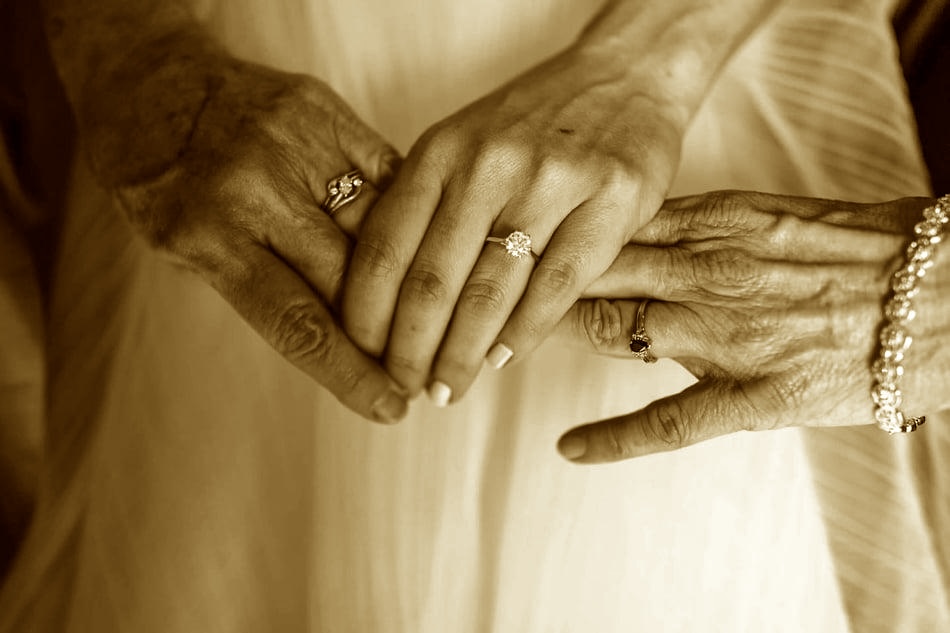
Maybe some of them become a kind of experiential heirloom.
Not because they’re objectively important.
Not because they’re expensive.
Not because a critic declared them masterpieces.
Because they were there.
And then more life happened.
So another association attached itself. And another. And another. The thing starts becoming less like an artifact from one period of your life and more like a thread running through several of them.
Growing With Things
Maybe we’ve been using the wrong model. We tend to imagine development like a ladder.
Encounter something.
Learn from it.
Outgrow it.
Move on.
Next rung.
And obviously, sometimes that’s exactly what happens. I’ve outgrown plenty of things. Interests disappear, beliefs stop making sense. Relationships end.
Old versions of ourselves become impossible to inhabit. Growth sometimes requires leaving. But perhaps there’s another kind of development that’s less like climbing a ladder and more like moving in an orbit.
You encounter something.
You love it. You leave.
You change.
But then you return.
And because you’ve changed, you discover something different. But then you leave again and more life happens. And then you return again. Same object.
We say:
I’ve seen that movie before.
Sure.
But this version of you hasn’t.
That’s why a book you’ve read five times can suddenly devastate you on the sixth reading. Why a lyric you’ve known for twenty years can suddenly make sense.
Or why something your parents loved can become meaningful only after they’re gone.
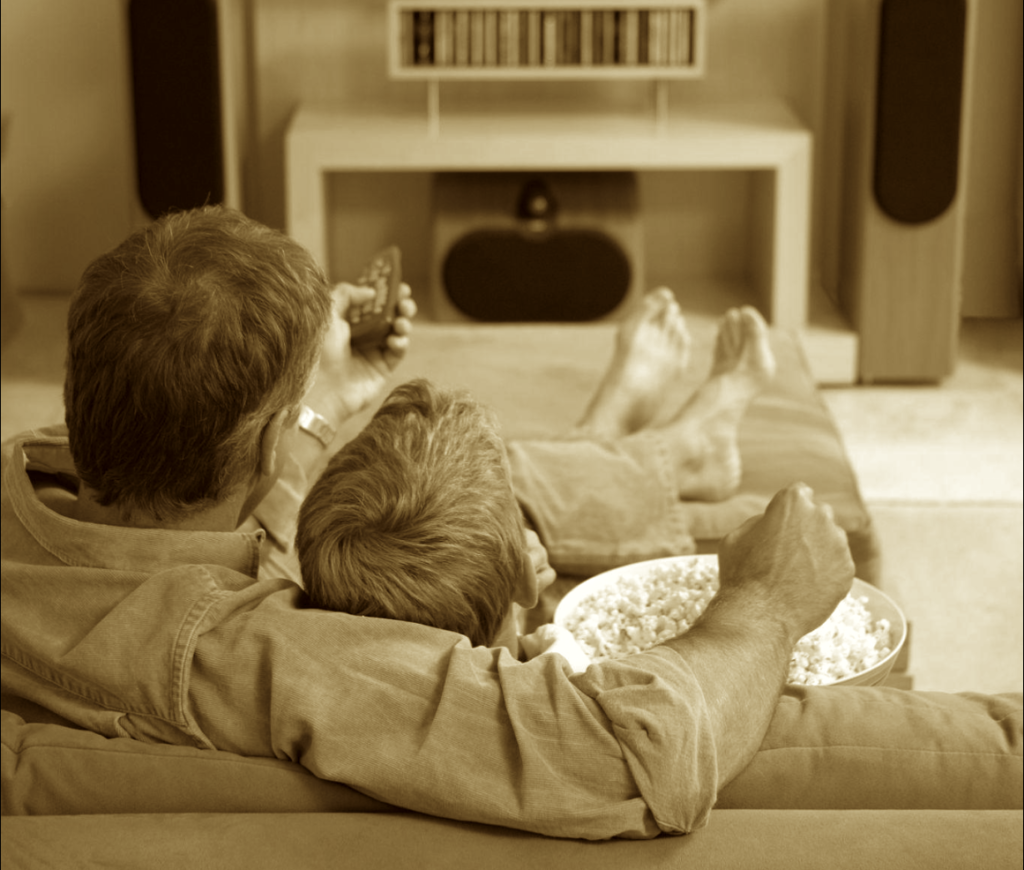
For me a movie about four misfits catching ghosts probably looked like a glorified toy commercial to the adults in my toddler life. Eventually it become tangled up with family, comfort, identity, friendship and belonging.
The monster in your fridge
The artifact isn’t necessarily becoming more sophisticated.
You are becoming more capable of having a sophisticated relationship with it.
And sometimes? Sometimes I just want the proton packs.
That’s important too.
Because I don’t think adulthood should require us to turn every childhood pleasure into an intellectual exercise before we’re allowed to keep it.
I shouldn’t have to explain the team dynamics in Ghostbusters to justify watching it. A lifelong Tolkien fan shouldn’t need to produce an essay on mythology and linguistics. And the owner of our imaginary Pooh bear shouldn’t need a dead grandfather.
Sometimes the comfort blanket is an incredibly ornate tapestry. Sometimes it’s a ratty blanket.
It’s still allowed to keep you warm.
I love this plan. I’m excited to be a part of it. Let’s do it!
There is a danger here.
We can absolutely use nostalgia to hide. We can retreat into the familiar because the present is uncomfortable and we can decide everything was better when we were twelve. It’s dangerously easy to stop discovering new music, new stories, new people and new ways of thinking because we’d rather live inside a museum of ourselves.
A comfort blanket can keep you warm.
You can also pull it over your head.
Maybe that’s the distinction worth paying attention to.
Does this thing help me carry my history into the present? Or does it help me avoid the present altogether? Because I don’t want to become three-year-old Tim again.
I can’t.
And frankly, three-year-old Tim had very little purchasing power. But I like knowing he’s still in there somewhere. I can watch that Christmas tape and see him.
Pure excitement. No embarrassment.
When I watch Ghostbusters now, I’m not trying to return to him. Maybe I’m letting him come with me. The movie has accumulated almost forty years of associations since then.
Parents.
Grandparents.
Christmas.
Sick days.
VHS tapes.
Fear.
Comedy.
Friendship.
Belonging.
And whatever else I haven’t noticed yet.
That’s the part I think “growing out of things” misses. Every once in a while, something sticks around long enough to become part of the way we understand who we’ve been, who we are, and perhaps even who we’re becoming. We grow with it.
theories Summarized.
Experiential Heirlooms Some things accumulate meaning simply because they stay with us. An object, story, song, tradition or other artifact can become connected to multiple versions of ourselves as more life happens around it.
Like a family heirloom travelling through generations, an experiential heirloom travels through different periods of a life.
Growing With Things Growing up doesn’t always require growing out.
Sometimes development works less like climbing a ladder and more like moving in an orbit. We encounter something, leave it, change, return and discover something new.
The artifact may remain relatively stable.
The person encountering it doesn’t.
The Comfort Blanket Test Comfort and nostalgia aren’t inherently signs that we’ve stopped growing. But the familiar can become somewhere to hide.
Ask: Does this thing help me carry my history into the present? Or does it help me avoid the present altogether?
A comfort blanket can keep you warm.
You can also pull it over your head.