My Unified Theory of Adaptation
Two stories unexpectedly collided for me this week.
The first was Adaptation. Spike Jonze’s metafictional comedy-drama told about Charlie Kaufman’s strange, self-referential film experience about trying to adapt a book that seemingly has no story. I hadn’t seen it in years, and I found myself moved by it in ways I couldn’t fully explain.
The second was an episode from the new season of X-Men ’97.
On paper, they have almost nothing in common.
One is a quiet, introspective film about a screenwriter wrestling with artistic paralysis. The other is a superhero cartoon continuing a series I grew up loving. Yet both left me in tears.
It took me a couple of days to realize what that feeling was representating, but somewhere between Friday, Saturday, and today, I pieced it together.
The Stories That Found Me
There’s a key moment in Adaptation. where John Laroche admits something that catches Charlie off guard. It’s a blink and you might miss it moment. In describing what love means to him he explains to Susan Orlean and why he didn’t chase it too hard. As a kid, he hoped someone would simply see him. Not fix him. Not change him. Just recognize him.
The line hit me a lot harder than I expected.
Then, less than twenty-four hours later, I watched X-Men ’97 to catch up on things. Because the statute of limitations on spoileris 6 months, I will warn you here not to read the next few paragraphs if you are getting caught up on the show, because this absolutely spoils it. Even though it kind of follows comics from the 90’s so… you know, do with that what you will.
OK fair warning, read on if you don’t care or if you’re caught up.
The episode follows Polaris as she struggles with her identity while Professor Xavier, grieving the very loss of his oldest friend Magneto, unexpectedly finds comfort in helping her. Worst of all, she does not identify with her biologial father, despite the media wanting to make obvious connections. Polaris fully admits that she always saw Charles as more of a father figure, but he doesn’t want to assume that authority over her. Yet, by the end of the episode, Xavier doesn’t simply teach Polaris to control her abilities. He helps her understand herself.
Again, I found myself unexpectedly emotional.
Two completely different stories.
Two completely different genres.
The same emotional response. That was the clue.
Lost in Propogation
For years, I’ve considered myself to be someone who learned through stories.
Grimm’s Fairy Tales.
Bible stories.
Comic books.
Cartoons.
Movies.
Music.
The underlying assumption I made was that they mattered because they entertained me. It was pure and simple. But as I grew older and started to look back, another pattern emerged. I kept returning to stories because they had quietly helped me make sense of my self and life. Familiarity was not a guarantee of value in this case..
As a kid, I often found myself trying to make sense of emotions that felt bigger than the language I had available.
I knew what fear felt like before I knew how to describe anxiety.
I knew what loneliness felt like before I understood belonging.
I knew what injustice felt like long before I could explain fairness.
Sometimes an adult would help me untangle these feelings more deeply. More often, I stumbled across the answer somewhere else; a conversation, a book, a film, or a comic. A song lyric that understood me before I was ready to understand myself.

Every story gave me another way to describe something I had experienced but couldn’t explain yet.
Each characer become another lens and metaphor became vocabulary.
Stories became the interpreters I didn’t know I was looking for. That realization changed the way I now think about art. I was collecting terminology. I was collecting language.
What if the greatest purpose of stories isn’t entertainment?
What if it’s translation?
Not translating English into French. Translating confusion into understanding. Emotion into language. Experience into meaning.
What Expressions I Inherited
That’s when another realization hit me. I started thinking about all of the stories that stayed with me over the years.
Not just Adaptation.
Or X-Men.
Everything.
Spider-Man.
Batman.
Chrono Trigger.
Ghostbusters.
Grimm’s Fairy Tales.
The Matrix.
Pokemon.
Dragon Ball Z.
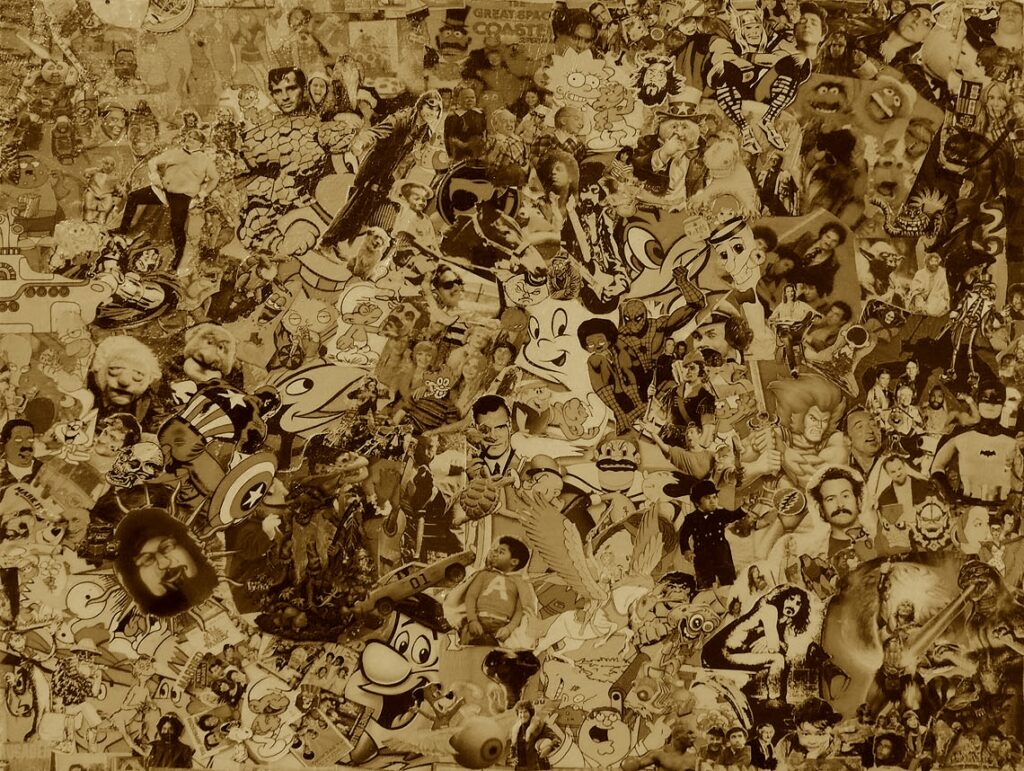
And these are just off the top of my head. At first glance, none of these things belong together. And realistically, the emotions shouldn’t have either.
But they kept circling the same questions. Who am I?
What makes a good person?
How do I forgive?
What is worth sacrificing for?
What does it mean to belong?
How do I keep hope when life hurts?
That’s what confused me when I started thinking about Adaptation. and X-Men ’97.
These stories weren’t connected.
Different writers.
Different cultures.
Different decades.
Different media.
Yet somehow they seemed to be speaking the same language for me. And similarly so did all of these other characters. The questions followed me from one story to another. Through superheroes, fantasy, science fiction and more.
I didn’t know what that language was as I consumed them, but as I reflected upon them recently, I started to wonder, why are all of these stories asking me the same kinds of questions? Maybe I wasn’t returning to these stories because they were familiar.
Maybe I was returning because they were helping me wrestle with the same questions in different ways. What am inheriting as I spend time with them?
Emerging Theories
I think that’s how humans learn.
As I kept sitting with that question, another possibility started to emerge. I wasn’t inheriting questions only, I was inheriting better ways of asking questions.
Every storyteller approached those questions differently. Every cultural example answered them differently. Every generation expressed them differently.
Yet somehow I kept recognizing something familiar.
We inherit stories. Stories become myths. Myths become conversations. Conversations become theories. And if they’re good enough, they eventually become part of how we see the world.
We retell them.
We argue about them.
We recommend them to friends.
We adapt them into films.
We rewrite them for another generation.
We borrow their language until it becomes our own.
And somewhere in that process, something strange happens. The story slowly becomes an idea. The idea becomes part of how we interpret the world.
Only later do we realize we’ve been carrying it around for years.
Maybe that’s what a theory really is.
Not an answer.
A pattern we’ve recognized often enough that we finally give it a name.
And maybe that’s why Adaptation. affected me so deeply. Charlie Kaufman spends the entire film trying to adapt a book By the end, I realized the real adaptation was within Charlie himself.
And then X-Men ’97 reflected that concept of adaptation in a different way.
To put it another way, I don’t think anyone has ever sat me down and taught me these patterns. No teacher ever handed me a worksheet titled:
How to wrestle with identity.
Neither of my parents ever plainly said,
“Today we’re going to discuss belonging.”
Instead, those ideas kept arriving disguised as stories.
Sometimes they looked like Professor X.
Sometimes they looked like Charlie Kaufman.
Sometimes they looked like an old fairy tale.
Every story seemed to approach the same uncertainty from another angle.
Another metaphor.
Another character.
Another world.
At some point, I stopped fixating on the stories themselves. I started focusing on what they were pointing toward.
Catalyst for Adaptation
Now we land the plane. This is where everything converges. I had been thinking about adaptation as if it meant changing something.
But what if that’s backwards?
Charlie Kaufman thought he was adapting a book. Comic writers think they’re adapting characters. Teachers adapt ideas. Parents adapt lessons. Artists adapt experiences.
Every generation adapts the stories they inherit. We adapt ourselves. It’s a seemingly counter-intuitive act of preservation.
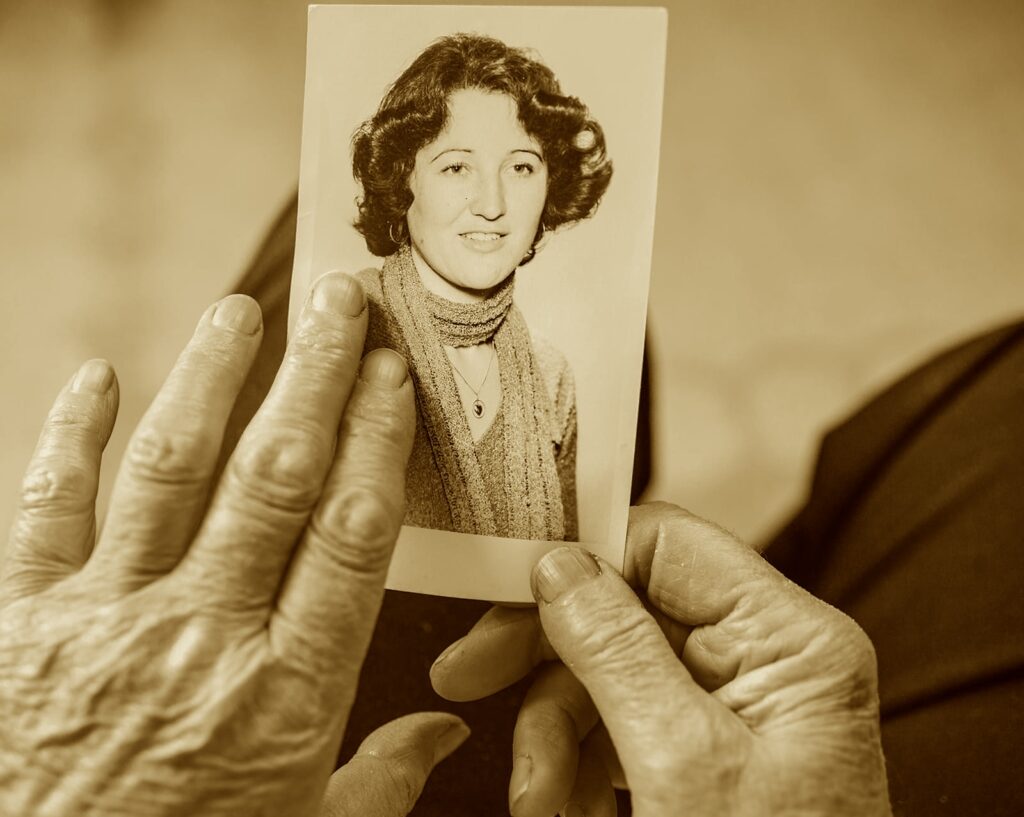
Not preserving the exact characters.
Not preserving the exact plot.
Preserving the thing those stories were trying to express.
Maybe that’s what adaptation has always been. Not interpretation of the truth, but a means to help another generation recognize it.
And maybe that’s why Adaptation. affected me so deeply. Charlie spends the entire film believing he’s adapting Susan Orlean’s book. I spent the entire week believing I was simply reflecting on two stories.
By the end, I realized something else had been adapting.
Me.
theories Summarized
I’ve spent years trying to distill what timotheories means.
Usually I describe it as a collection of theories. Sometimes I describe it as a place to digitally curate your heart. And other times I’ve said its a refinery for creative thinkers.
After this week, I don’t think that’s quite right. Or at least… I don’t think it’s the whole story.
A theory isn’t simply an explanation. It’s an attempt. An attempt to give language to a pattern we’ve recognized. An attempt to translate an experience into something another person can see for themselves. And we hope someone else recognizes themselves in it.
That’s why stories have always mattered so much to me. They didn’t simply entertain me. They interpreted me to me.
They gave me language before I knew the words.
Questions before I knew to ask them.
Perspective before I had enough life to earn it on my own.
Looking back, I don’t think I inherited Spider-Man.
Or Ghostbusters.
Or The Matrix.
I inherited ways of seeing.
And perhaps that’s what every great teacher, artist, parent, mentor, therapist, philosopher, and storyteller has always been trying to pass along.
A better way of understanding what it means to be human.
Maybe that’s what I’ve been adapting all along.
Perhaps we don’t inherit stories after all. We inherit ways of seeing and being.