When a Star Wars Story Stops Fitting Us
I was born in 1985, which means I grew up in a strange and wonderful pocket of Star Wars history. I was old enough to experience the cultural gravity of the original trilogy, but young enough that the prequels felt like my Star Wars.
For a long time, the galaxy far, far away was defined by a handful of names: Skywalker, Kenobi, and Palpatine.
Those were the pillars of the story.
And like a lot of kids who grew up with those films, I didn’t just watch the characters. I tried to figure out which one I was most like and which one I aspired to be like. That’s what great mythic storytelling does to us. It invites identification.
Luke is the hopeful hero.
Obi-Wan is the wise guide.
Anakin is the tragic prodigy, who later becomes Vader – the powerful villain.
At different points in life, people see themselves in each of them.
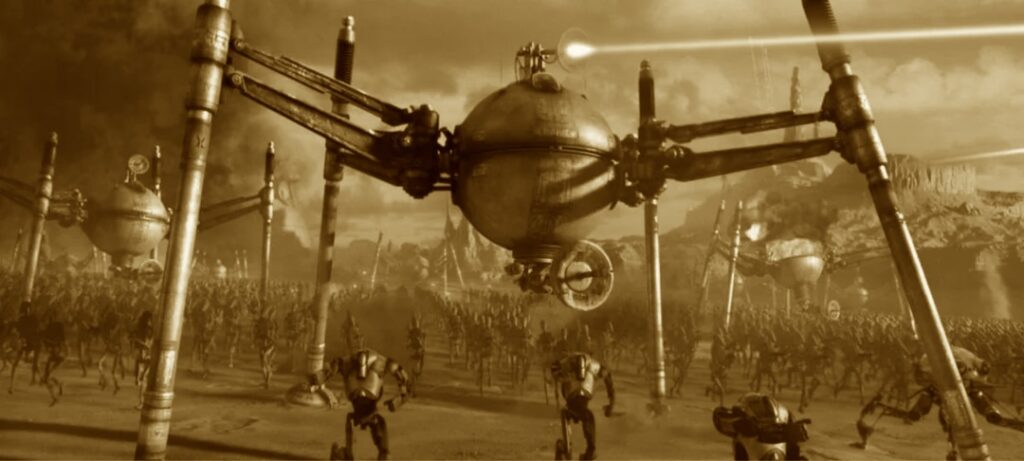
But as the Star Wars universe expanded, through shows like The Clone Wars, a lot of novels, assorted games, and countless new characters, the galaxy started to feel bigger than the myth that introduced it.
And the older I get, the more I realize something interesting.
The question stopped being which hero I related to most.
The question became something else entirely.
Anakin, Ahsoka, and the Moment We Start Drawing Our Own Characters
For me, and I suspect a lot of other people, the story becomes more compelling the further it moves away from the Skywalker saga. Because once you step outside that central myth, you begin to see the galaxy for what it really is: a living world filled with people making choices inside systems that don’t always deserve their loyalty.
That’s where characters like Ahsoka Tano enter the picture.
And that’s where the story starts to feel different, I think.
I. The Tragedy of Anakin Skywalker
For people my age, Anakin’s story hit hard.
Not the version from the original trilogy, where he is already Darth Vader, but the version that unfolds in The Clone Wars era. Anakin Skywalker is powerful. Charismatic. Emotional. Loyal.
He is also deeply conflicted.
He believes in the Jedi Order, but he chafes under its structure.
He wants recognition, but feels constantly misunderstood and challenged.
He loves deeply, but fears loss even more deeply.
In many ways, Anakin’s story is really the story of someone who feels out of alignment with the system that shaped him but cannot imagine leaving it.
He tries so hard to force the system to bend.
And that’s the tragedy.
When the institutions inevitably fail him, Anakin doesn’t step outside the system.
He tries to seize control of it.
That path leads to Darth Vader.
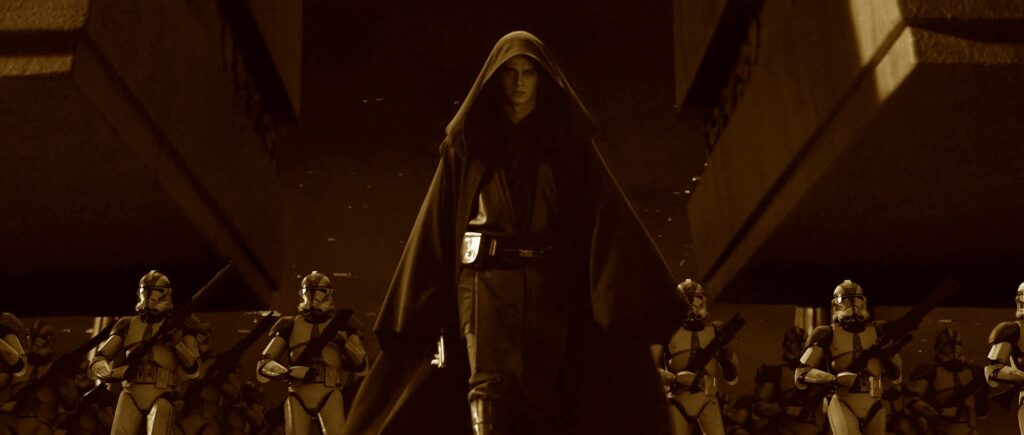
He can’t imagine a life outside the framework that defined him. And each time the Order fails him, the disillusionment cuts deeper and his spirits dip further.
For a long time, that was the one of the key emotional arcs of Star Wars.
The fall of the hero.
But then another story started unfolding alongside it. And that story belonged to Ahsoka.
It’s essential viewing, in my opinion. The frustration you see building in Anakin during the war becomes something darker by Episode III. Real anguish. This is due in part to “losing” his padawan.
Without that context, his struggles in the film can read as angst and/or bravado. But there’s real hurt underneath it. His relationship with his former padawan becomes one of the emotional anchors of the era.
II. The Moment Ahsoka Walks Away
Ahsoka Tano enters The Clone Wars as Anakin’s apprentice.
At first she seems like a supporting character, a sidekick meant to humanize the main story. But over time something unexpected happens. The galaxy begins to shift around her.
The Jedi Council grows more rigid.
The war becomes morally complicated.
And eventually Ahsoka is betrayed by the very institution she trusted.
She is accused of a crime she didn’t commit. Expelled from the Order. Put on trial by the Republic she had been fighting to protect.
The people who trained her.
The people who shaped her.
The people who were supposed to trust her.
They abandon her almost immediately.
By the time the truth comes out, the damage is already done.
The Jedi Council offers to welcome her back.
But something has changed.
The moment she leaves the Jedi Order is one of the most powerful moments in the entire Star Wars canon. Because the audience expects her to return. The system failed her, but now the system is apologizing. The path back is open. The story can go back to normal.
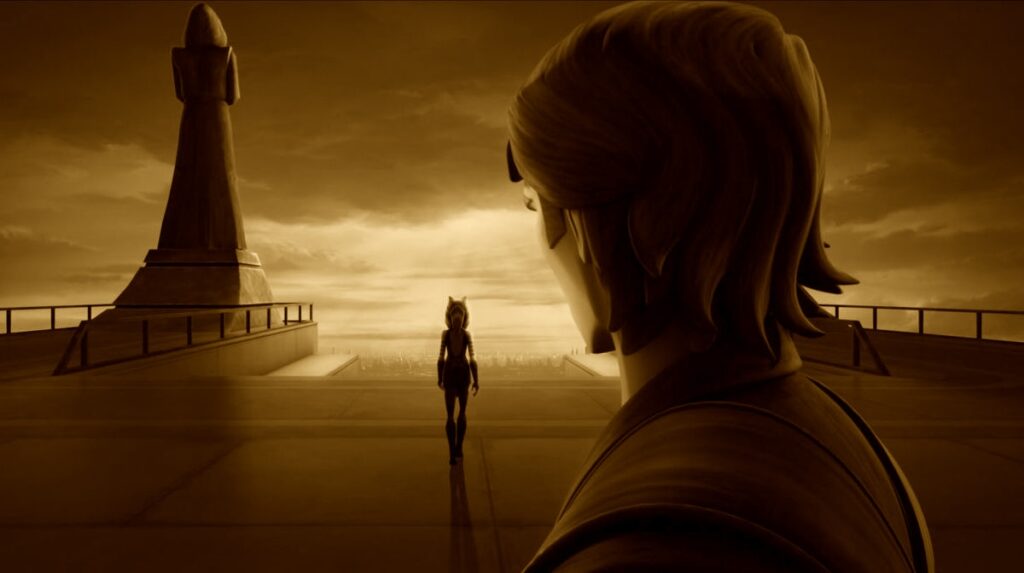
But Ahsoka refuses.
Not out of anger.
Not out of vengeance.
Out of clarity.
Ahsoka doesn’t abandon the mission.
She abandons the institution that claimed to represent it.
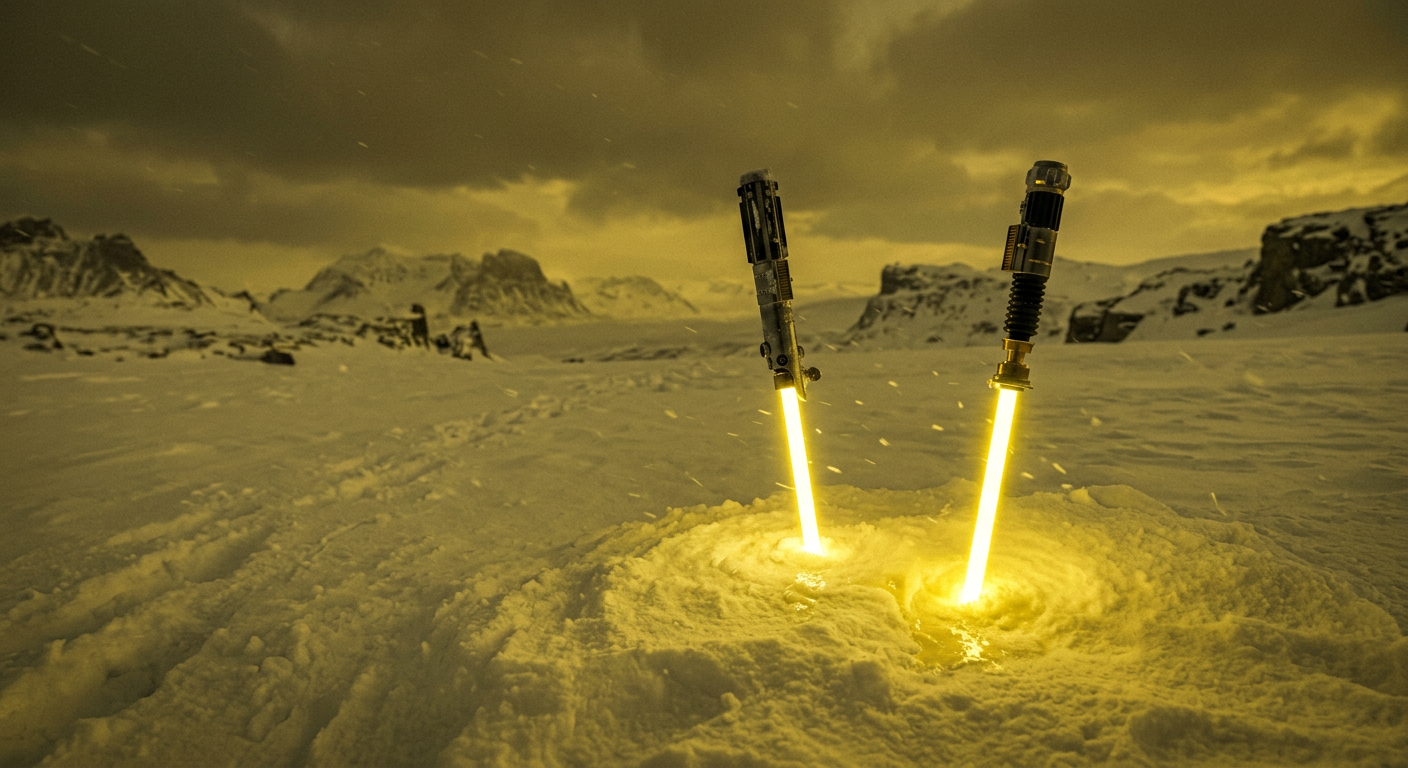
She doesn’t fall to the dark side. She doesn’t become bitter. She simply walks away. Later, in the closing moments of The Clone Wars, she leaves her lightsabers behind in the snow.
Those sabers once symbolized her identity.
Her place in the Order.
Her role in the war.
Her place in the story.
But in that moment she lets them go.
When Darth Vader eventually finds them, the scene is quiet and haunting. There are no speeches. No explanations. Just a frozen battlefield, two lightsabers, and a story that has moved beyond the epic myth that once defined it.
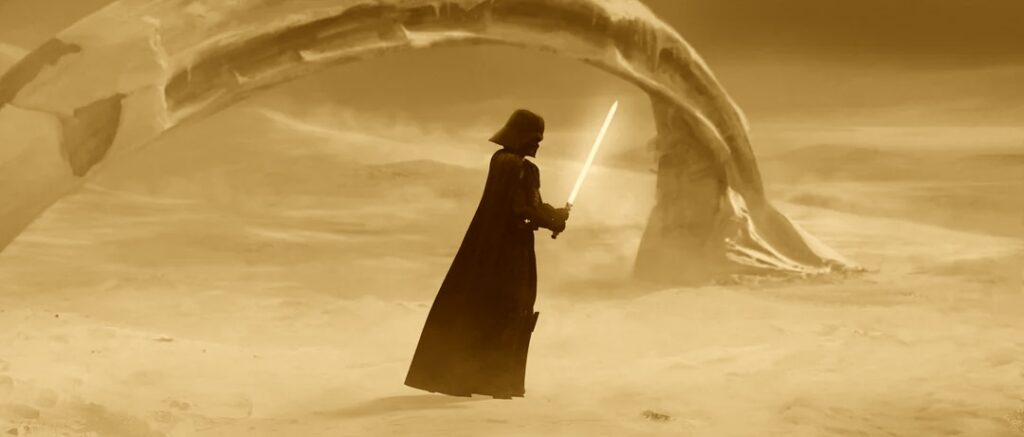
Ahsoka doesn’t destroy the system.
She simply refuses to let it define who she is. And in doing so, she becomes something Star Wars had rarely shown before.
Not a Jedi.
Not a Sith.
Something else entirely.
And perhaps that’s why her story resonates so strongly with me.
III. When the Fantasy Stops
For a long time I thought this Star Wars question was simple:
Which character am I?
Am I the hero?
The mentor?
The fallen knight?
But the older I get, the more I realize that question eventually stops making sense. Because life rarely unfolds according to archetypes.
The stories we grow up with shape us. They give us language for courage, failure, redemption, and hope. And eventually, something really interesting happens. We grow up. The story we thought we were supposed to live inside stops fitting.
The institution we trusted disappoints us.
The role we played begins to feel smaller than the person we’re becoming.
At that moment we have a choice.
Some people try to force the story to continue. Others step outside of it.
That’s the Ahsoka move. Refusing to live inside the story someone else wrote for you.
Not rebellion against an opposing force. Rebellion against totalistic systems.
You realize something important. The archetype you once identified with doesn’t get to decide who you become.
IV. Drawing New Characters
Lately, I’ve been thinking about that idea a lot while working on a series of drawings. A deeply personal project.
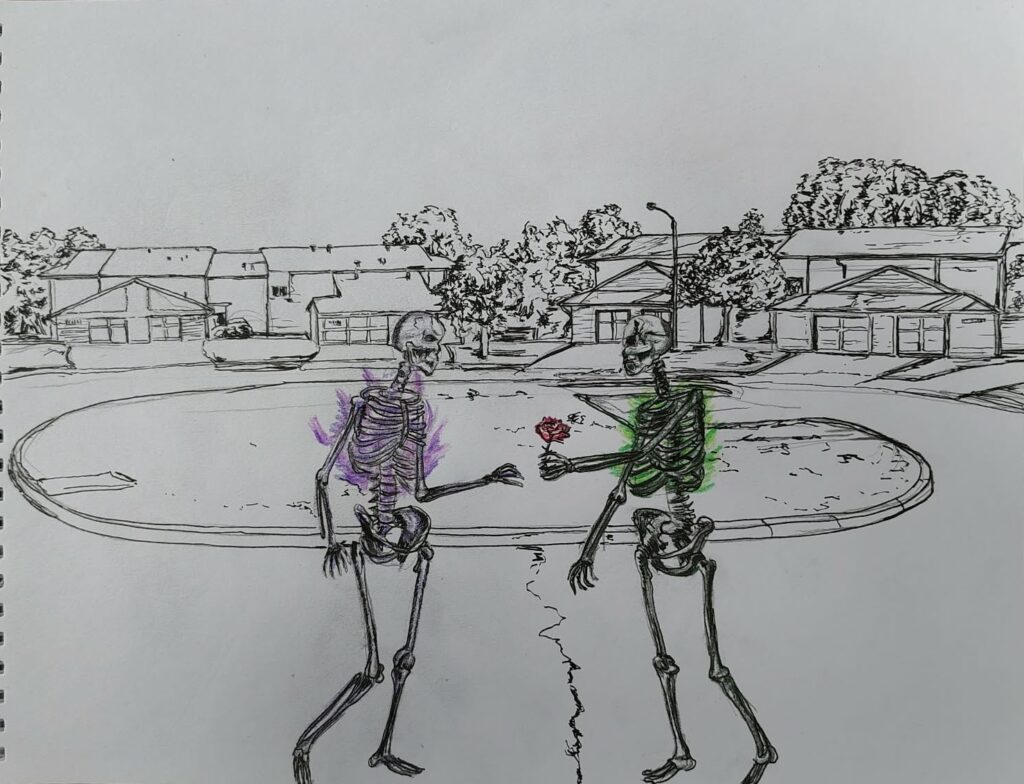
Some of the drawings feature skeleton figures standing in ordinary places: suburban streets, train platforms, waiting rooms, and other quiet environments that feel familiar and slightly strange at the same time. I’m calling the series Liminal Spaces.
The skeletons are not meant to represent death.
If anything, they represent structure.
The bones of identity.
The parts of us that persist through time.
When I draw them, I’m not trying to explain exactly who they are or what they represent. Or why they are in these environments. Or what their relationship is to each other.
Sometimes the viewer connects them into a narrative.
Sometimes they don’t.
That ambiguity is a major part of the point.
Eventually something shifts in the way we relate to stories. When we’re young, we try to figure out which character we are. We want clearly defined roles and identities that make life feel definitive.
Eventually we stop asking that question. Thankfully.
Instead of fitting ourselves into someone else’s mythology, we start drawing our own characters. They carry pieces of the stories we loved.
In a way, that’s what Ahsoka does.
She stops trying to fit herself into the story the Jedi wrote for her.
She keeps the values. The mission. The sense of purpose.
But she redraws the character she was expected to play.
And she isn’t bound by them anymore. It’s a call to courage, not power.
V. The Galaxy Beyond Archetypes
One of the reasons Star Wars remains so powerful as a cultural touchstone is that it allows for this expansion.
The original films gave us myth.
But the larger universe, the shows, books, and side stories, gave us something else. They showed us a galaxy filled with people navigating the space between ideals and reality.
Soldiers trying to do the right thing in a war that makes less sense every day.
Citizens living under systems that no longer deserve their trust.
And characters like Ahsoka.
The brave ones who step outside the structures that once defined them and choose a new path.
That’s why the galaxy becomes more interesting the further we move from the central prophecy. Because the real story isn’t about a chosen one.
It’s about what people do when the story they thought they were living inside begins to change.
And perhaps that’s why these stories linger. Because they give us archetypes to live inside temporarily. And because they eventually give us permission to step outside them.
When that moment comes, the question isn’t which character we are anymore.
The question becomes what kind of character we’re willing to draw next.
VI. theories Summarized
Stories help us understand ourselves, especially when we’re young. Eventually we realize that the archetypes we love are only starting points.
We don’t have to become Luke, Obi-Wan, Anakin, or Ahsoka.
We can learn from them, carry their lessons forward, and still choose our own path.
The real moment of growth comes when we discover we’re free to draw new characters.
And sometimes the most interesting stories begin the moment we step outside the script we thought we were supposed to follow.