The Ghosts in the Background – Why I’ve Been Revisiting Sitcoms
We are living in the era of infinite choice.
Every show ever made sits one click away. Entire libraries of culture are available on demand. And yet, more and more people are rewatching the same shows they’ve already seen.
It’s not just nostalgia. It’s not laziness. It’s not a lack of options.
It’s something else.
I’ve also have been rewatching sitcoms since December 2025.
Not the prestige drama, nor the limited series the algorithm always insists I’ll love. Old sitcoms and ones I’ve already seen. The ones I can quote freely or that make me smile when I recall the plot the first few minutes in. The ones where I know exactly when the punchline is coming.
At first, I told myself it was comfort viewing. That it was just low stakes winter watching and something to decompress between my day job, contract work, the recommitment to timotheories and all of my other relationships. Twenty-two minutes and the problem resets.
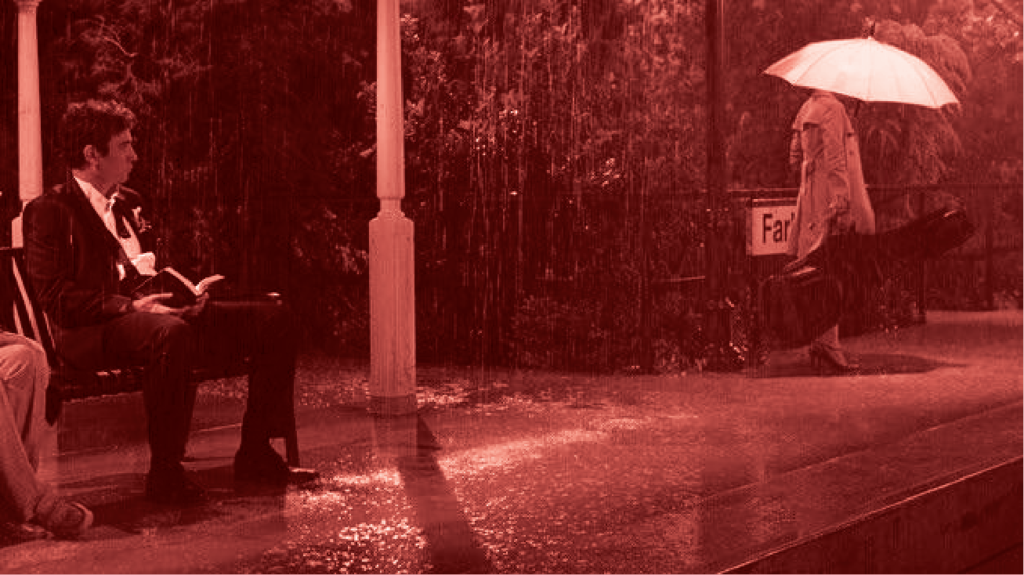
Shows like The Office or How I Met Your Mother don’t demand much from you emotionally. They’re predictable. Structured. The characters argue, spiral, confess and still end up back on the figurative couch together before the credits roll. Or meeting room. Or bar. Respectively.
Sitcoms promise something rare: instability without collapse. Tension without permanent fracture.
But the longer I sat with it, the more I realized it wasn’t just comfort viewing for me.
When I rewatched The Office, I wasn’t merely revisiting Scranton. I was revisiting a version of myself.
The guy who watched it initially after I finished my undergrad and was in the working world for the first time.
The guy who didn’t know what was coming next in his life.
The guy who believed certain futures were stable simply because they were presented that way.
Spoiler alert: The show didn’t change.
But I did.
Rewatching felt less like escape and more like visitation rights.
From Shared Ritual to the Infinite Scroll
There’s something else happening beneath the surface.
Sitcoms like Friends, Seinfeld, and later The Office or HIMYM weren’t just stories we watched. They were a communal activity and a rhythm that we chose to either collectively particpate in or not.
Thursday nights. Weekly anticipation. Conversations the next morning.
Even if we watched from separate living rooms, we watched together. And now we stream alone. We binge silently. The algorithm suggests. We consume. We move on. We’re often surprised when our friends, family or officemates are watching the same show.
We’ve gained infinite choice, and with it, infinite fragmentation. And if you don’t know what you’re looking for, it becomes the scroll that never ends.
Choice fatigue is real. Attention spans are fractured. Entire industries are now built on capturing and monetizing our focus. Video games, social media, pornography. A screen is never far away and the attention economy doesn’t want ritual; it wants retention.
But something gets lost in that shift.
When every show is available all the time, none of them feel anchored to a moment. When everything is personalized, nothing feels shared.
Rewatching an old sitcom cuts against that grain. It resists the endless scroll. It rejects the demand for novelty. It chooses repetition over optimization.
Maybe that’s part of the comfort.
Not just familiarity of plot, but familiarity of pace.
Not jokes, but rhythm.
In a culture obsessed with acceleration, rewatching is almost, dare I say it, rebellious. And maybe that’s why our culture keeps telling stories about alternate timelines.
Why We’re Obsessed with Multiverses.
We’ve spent the last decade culturally obsessed with alternate timelines.
Everything Everywhere All at Once
Doctor Strange,
and most of modern Marvel movies
Interstellar
Infinite branching realities. Versions of ourselves who made different choices. Universes where one decision alters everything.
We treat these stories like a grand spectacle.
But maybe they resonate because we already feel fractured. Not across galaxies, but across memories.
There’s the version of you who didn’t see the rupture coming.
The version who rebuilt.
The version who trusted too easily.
The version who learned to be cautious.
They don’t disappear. They accumulate.
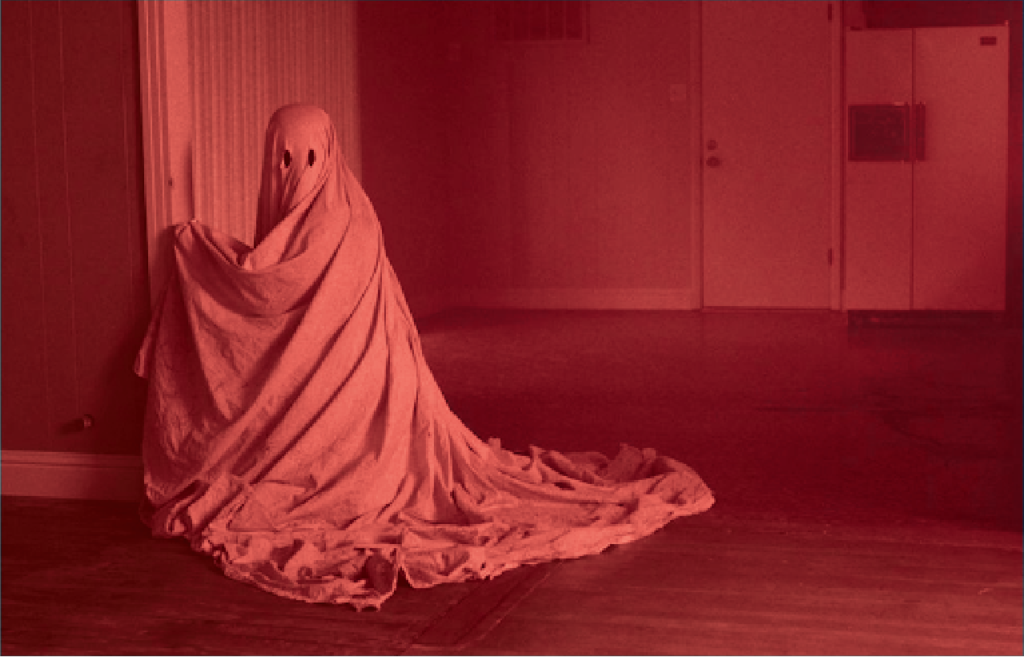
When I watched A Ghost Story for the first time this past fall, I wasn’t struck by horror. I was struck by stillness – Time folding in on itself. A presence lingering in a space long after the moment had passed.
What if ghosts aren’t regrets or memories?
What if they’re emotional continuity?
Not alternate universes.
Parallel selves inside the same circuit.
Stories as Emotional Storage.
For years after finishing How I Met Your Mother, I had this earworm from Band of Horses’s “The Funeral” stuck in my head. I couldn’t even remember why at first. I also couldn’t recall the song name or when it featured. It was a partial loop in my head. Worse yet, it was mainly the melody and the pitch the singer sang in that stuck with me. It just lingered.
Memory doesn’t always preserve plot.
It preserves feeling.
A sitcom becomes a time stamp.
A song becomes an emotional bookmark.
A movie becomes a vault.
The reason that song lingered was personal.
Around the time that show was ending, a long-term relationship was too. But for some reason, that earworm wouldn’t let me alone. It wasn’t until a few years later that I tracked the song title down, listened to it a thousand times, and finally had my catharsis.
Another story – I used to have recurring dreams about The Great Land of Small; a half-remembered childhood fantasy film that felt like a fever dream. I had distinct memories of children taking a boat across a river and coming out the otherside underneath a bridge, greeted by fairies and circusfolk.
I clung to that scene.
I grilled my grandparents about it many times over the years. No one else thought it was real. I lucked into the film again a year ago, perusing a specialty website for out-of-print and hard to find movies on Black Friday, and a core memory was unlocked.
Meanwhile, nightmares from RoboCop evaporated the moment I revisited them as an adult about 8 years ago. Namely the scene where the criminal gets melted with chemicals. Gruesome really. I would not buy that memory back for a dollar.
Some ghosts fade when confronted.
Others soften when acknowledged.
Rewatching doesn’t have to be a regression.
It can become integration.
Thresholds and Carrying Forward.
Sometimes the first major shift in your life happens to you. It happened to me, and I don’t need to relive it here.
You don’t choose it.
You survive it.
You adapt.
You carry its imprint.
Other times, you sense a threshold approaching – and this time, you’re finally the one stepping forward.
That changes the ritual.
Rewatching old stories in that space feels less like hiding and more like gathering resources and strength. I do worry sometimes that every time I suffer or lose something, I lose a piece of myself.
But maybe that’s not how it works.
Maybe we don’t subtract.
Maybe we layer.
My nana recently told me she’s had terrible things happen in her life – and in the same breath, that she’s had a good life. That tension used to confuse me. How can both be true?
But maybe its because a good life isn’t the absence of disruption.
It’s the presence of continuity. Ghosts that haunt us, beautifully.
But maybe the ghosts aren’t here to haunt us.
Maybe they’re here to remind us that we’ve already survived what we once thought would undo us.
So I’ve decided something. Rewatching old stories doesn’t have to mean we are clinging to the past. We’re carrying the best parts of who we were into whatever comes next.
I don’t know exactly what the next chapter holds.
But I know this: I’m not walking into it blindly. And for the first time, that feels less like fear – and more like a conscious choice.
theories Summarized.
In summary friends, rewatching isn’t regression unless you want it to be. It can be a retrieval. Culture Works.
Old shows become time stamps that reconnect us to former versions of ourselves. Don’t believe for a second that the multiverse is out there – it’s internal. We carry parallel versions of ourselves across memory, experience, and identity shifts.
Choice fatigue is a symptom of fragmentation. In the digital attention economy, infinite options replace shared ritual. Rewatching restores rhythm. Stories are emotional storage. Songs, sitcoms, and films hold feelings long after plot details fade.
And the bravest thing I share today: ghosts don’t haunt us – they mark continuity. The versions of us who survived previous thresholds remain part of the circuit.