
You Don’t Have a Motivation Hesitation. You Have a Problem With Pulp Friction.
So often in life people speak about motivation like it’s an inherent trait.
You either have it or you don’t.
You’re either disciplined or you’re lazy.
You either want it badly enough or you have a skill issue.
It’s a comforting story because it gives us someone to blame when things don’t go our way. And the part that hurts is admitting that, that someone, is actually ourselves.
I’ve been a witness to this in my own life, and I’ve watched lots of people I care about struggle with this notion too. But after years of watching creative people burn out, stall, or quietly give up on work they genuinely care about, I’ve come to believe something else is happening in these moments of doubt and punishment.
Its that people don’t only have a motivation problem.
They also have a friction problem. A pulp friction problem, to be precise. And yeah, I likely alienated a bunch of people with my dumb Pulp Fiction play on words, but its my blog and I’m a little rusty, so just go with it or, you know, stop reading… you have free will.
Motivation is unreliable. Friction is not.
Motivation is in fact, an emotional state. It’s a cyclical force. You can’t outsource it, because not only is it internal and NOT inherent, but it arrives precisely when it means to, not when you expect it to.
It fluctuates based on sleep, stress, confidence, health, novelty, and about a dozen other variables you don’t really get to control, but boy howdy are there a lot of articles, books, videos, and coaches selling shlock about how to galvanize it.
Friction, on the other hand, is also force, but its structural. Friction lives with us every day. It’s the invisible resistance between intention and action. When two people have chemistry and polarity, it’s friction that keeps ambiguity alive.
If motivation asks, “Do I feel like doing this?”
Friction asks, “How hard is it to start?”
And that question matters far more than we like to admit. Because friction is consantly showing up, and shockingly, putting us back in our seat. Because some of us think the world is a skating rink, when its actually more like a skate park. And then when you miss the kick flip, it has the audicity to whisper, “see, I told you. I told you you’d wipe out brah”
I also happen to believe that much like how there is a purpose healthy fats serve in proper nutrition, there are is good friction and there is bad friction. You can insert your tasteless sex joke now, if you’d like.

Let’s call bad friction, pulp friction; it can seem appealing, but ultimately it adds no real value to your life. Its empty calories baybee.
What friction actually looks like. IRL.
Friction isn’t dramatic. And that’s why it’s incredibly dangerous.
It shows up as:
- too many decisions before you can begin your work
- tools that aren’t ready when you need them
- unclear next steps
- emotional residue from previous failures
- environments that work against you instead of for you
None of this feels like a real excuse, so we internalize. We tell ourselves we’re unmotivated. Unfocused. Undisciplined. Unhappy. Broken.
I probably sound like a broken record. But some things need to be said twice and then said a little differently the second time around. I’ve watched people mistake motivation for a inherent trait – something you either have or don’t. When in reality it’s shaped by context, exposure, and environment. That’s the friction.
In other words, pulp friction is a bad thing because it doesn’t stop you by exclusively as a force – but one that stops you with exhaustion.
And if you want the deeper theory behind why context shapes drive, I’ve been circling another similar question for over a decade.
Related Theory:
Motivation and Movies (Universal Concepts) — how stories, archetypes, and environment shape what we think is “drive.”
Why “Just try harder” keeps failing.
OR What happens when you design for friction instead of fighting it.
When something feels hard to start, we default to willpower. Thats the trap of pulp friction.
We hype ourselves up.
We wait for the mood.
We promise tomorrow will be different.
Sometimes it works. Albeit briefly.
But relying on motivation is like trying to run a business on adrenaline.
It’s expensive. It’s unsustainable. And eventually, either you crash or the business does.
The problem isn’t that you can’t push through friction.
It’s that you shouldn’t have to, at least not every damn time.
Good systems reduce friction so effort actually compounds and the friction becomes more like a boundary you can play with as opposed to a wall you have to climb.
And if you know me, you know how I love to bend the rules.
A simple shift that changes everything
I want you to stop asking yourelf: “How do I motivate myself?”
Instead, I want to you to start asking: “What’s making this harder than it needs to be?”
It might feel like a dodge, but that shift reframes the problem from character motivations to set design. And design is just a touch more solvable.
I didn’t understand this at the time, but one of the most effective motivation systems I ever built wasn’t intentional. Yes the functionality of it produced some great results, but when I set out to watch some of the great films of all time, I made a list. It was called The Watch List.
What kept the project alive wasn’t discipline or passion. It was friction – designed in the right direction. And rules that made starting easier than constantly deciding.
- fixed cadence (one film a week, not “whenever I feel like it”)
- bounded choice (the list decides for you)
- identity continuity (“I’m someone who watches films this way”)
The Watch List worked not because I wanted it badly enough, but because it removed daily negotiation. If you want to see how that played out over time, I unpacked it further in my most recent Watch List post.
Examples you might recognize.
You might recognize friction as:
• staring at a blank doc because the first sentence feels like a commitment
• skipping the gym because the transition feels heavier than the workout
• abandoning creative projects because you have too many open decisions
“Because” becomes the cost of entry, and it always feels like too high of a price.
In every case, the win comes from removing resistance, not adding pressure.
Design beats discipline.
This idea didn’t start as a rule. It started as an observation. Which I originally noted with the idea about motivation and movies, and personally resolved in developing a system with The Watch List… but these were blueprints, useful tools, not the workshop they belonged to.
Which is what I envisioned timotheories to be originally, and then redefinied when I had a lot of space to develop timotheories 2.0.
And you see, this is the quiet truth most productivity advice skips:
People who “seem disciplined” are usually just standing in better-designed systems.
Their environment supports them.
Their defaults help them.
Their process forgives off days instead of punishing them for it.
They still struggle, but they don’t have to fight themselves just to begin. That’s the whole point of School Of Thoughts, to give you the life skills you need to get started on your own.
What this means for creativity. And for RL.
If creativity is part of who you are, not just a hobby, not just a phase, well then I hate to break it to you creative cuties, but friction is an essential element of life.
Just remember, unchecked friction doesn’t just slow output. It erodes your identity. It exhausts it, through persistent stops, like wood being broken down into pulp. Pulp friction.
Optional Story Time:
I didn’t lose my creativity. I lost the conditions that made it reachable.
That’s why so many people don’t actually say “I stopped making art.”
They say “I don’t know who I am anymore.”
And the solution isn’t more hustle. It’s intentional ease.
Designing your life so the right thing always feels like the easy thing.
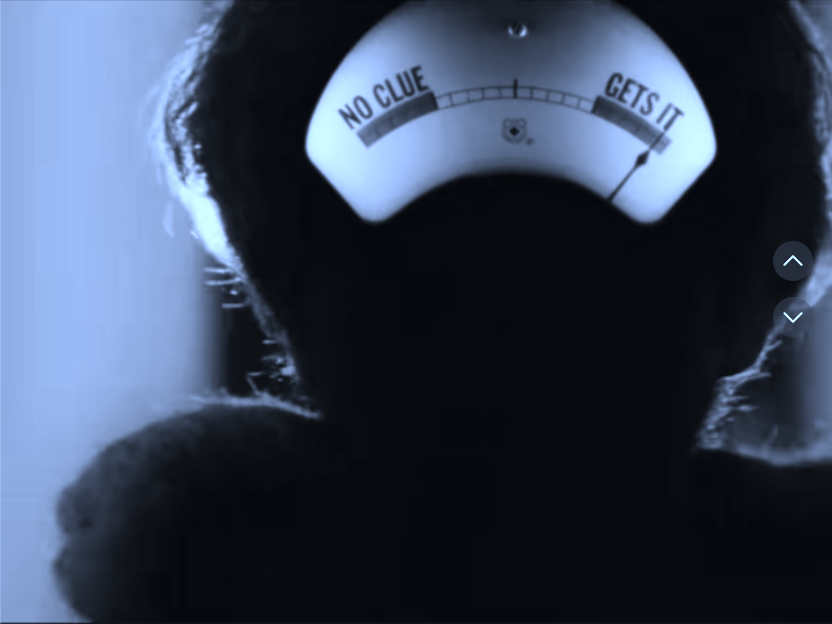
A better question to live with.
It’s not: Why can’t I stick with anything?”
But: “What’s the smallest version of this that feels easy enough to repeat?”
That’s where momentum actually comes from. Not from a cyclical force in motivation, but from flowing through the structural force of friction.
I know it’s going to be hard to make that shift, but it’ll be worth it. All good things are.
theories summarized.
Motivation will come and go. This we know, and that’s a part of the human condition. And frankly, waiting for it is not a strategy, it’s an incredibly risky gamble.
Instead, when starting feels heavy, consider that it’s likely not because you lack discipline. It’s because you haven’t built a system that supports movement. Running into friction doesn’t need to mean failure; make a structural choice.
Friction is not optional. You have to decide how you are going to interact with it. Reduce it and you don’t just get more done. You get yourself back by designing conditions that make showing up feel possible again.
Motivation will come and go. That’s part of being human. But friction isn’t weather. It’s structure. Design the climate and you won’t need to wait for the forecast.