Art Shaped Box: Art as a Memory Container
There are versions of me that only exist inside certain artifacts.
A blog post from 2015.
A half-finished board game prototype.
A studio layout I obsessed over for two months.
A swing dance floor where I tried not to look terrified.
An improv class where I realized I sounded “wooden.”
When I revisit them, I don’t just remember what I made. I remember who I was. And the more distance I gain from those earlier years, the more I understand something I didn’t have language for back then:
I don’t just create art. I store myself inside it.
I’ll say that again, but with feeling.
I am not an artist. I am art.
I wish that sounded less dramatic.
I wish it felt less necessary.
But it’s true.
It sounds dramatic, it probably reads as poetic and indulgent. But I mean it. Self-proclaimed sardonic wit. I want you to sit with that, and really read what I am sharing right now. I am art because when I am not, I don’t really exist.
When I stop making things, I lose continuity. When I stop shaping ideas, I dissolve into circumstance. When I am not creating, I become reactive instead of authored.
I choose to anchor.
The Museum of Selves
A lot of people think art is about expression. Or communication. Or craft. Hell, I’ve even heard the line, art is a waste of time. Yeah, literal people thinking its a hobby and a way to occupy yourself. Sure, all of this can be true, but reductive is as elusive does.
For me, it has ALWAYS been an act of preservation.
I don’t create art to be admired. I create it so I don’t evaporate. When I stop making things, I start dissolving, and I am then agreeable. Efficient. Whatever version of myself causes the least friction. That IS NOT real living.
I am not interested in being efficient, if efficiency costs me my edge.
Art is how I stay solid.
And now we’re talking about something real.
When I reread an old post, I will critique the writing, for sure. I also feel the emotional temperature of that season. The urgency. The insecurity. The ambition. The optimism that bordered on naïveté. But fuck it, some of those ideas were raw without a reason and we need more of that in world of filled with fake optimisim and manufactured consent. Kuality Talks is evidence. Yes, sometimes I will give you reassurance, but it always has to be a space for me to give you a manifesto and declare that we will not go quietly, we will not disappear.
We do not go quietly.
Not into efficiency.
Not into usefulness.
Not into the polite version of ourselves that causes the least friction.We rage in our own way.
Not loudly.
Not recklessly.
But deliberately.By making things.
By documenting ourselves.
By refusing to evaporate.
Art becomes a museum of selves.
Some exhibits are polished.
Some are experimental.
Some are slightly embarrassing.
All of them are honest.
And the honesty is what makes them valuable. What makes the archives important when we need to revisit a time capsule occasionally.
Life will shift, and it always does; roles will change, and expectations will tighten. Fine.
I will still make things. I will store myself inside them, and I will NOT disappear.
Come Out Swing [Danc]ing
In early 2015, I wrote a post about swing dancing.
At the time, it felt like a small New Year’s resolution. Try something new. Get out of the house. Participate instead of theorize, get out of my head about a recent break-up and into my body.
But looking at it now, I see what was really happening. I was trying to embody change. I wrote that I wanted to “participate in some dancing myself… to inform my art and challenge me to grow in health and social skills.”
That sentence was doing more work than I realized at the time I wrote it.
I didn’t just want to observe life. I wanted to feel it in my body again.
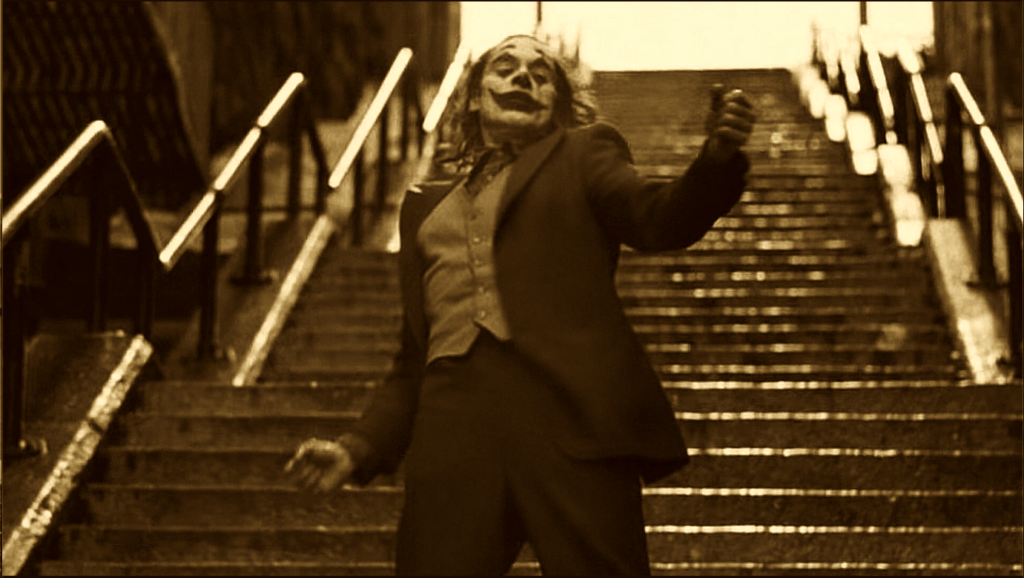
Swing dancing is awkward when you start. There is no way around that. You step on feet. You misread cues. You laugh through discomfort. You cannot hide behind intellect. The body stores that growth. And it stores the moment you decide to show up anyway.
It stores the rhythm you couldn’t hear before but eventually begin to anticipate.
That night on the dance floor is still in me. Not because I became a great dancer. I don’t identify as a dancer, at all. But I did prove something to myself in that activation, that participation changes identity.
Art can be cognitive, but if it never enters the body (a container), it never enters memory. Kinetic experiences leave a record; so does courage.
Emotional Exposure: Improv
Let me tell you another story. A few short months after the swing experiment, I signed up for improv.
On paper, that decision makes very little sense. I was a visual artist. A proclaimed introvert who couldn’t make art with his body to save his life. Comfortable thinking before speaking. And improv demands the opposite.
You cannot plan your lines. You cannot polish your thoughts. You cannot retreat mid-scene and reorganize. You must respond.
In that post, I wrote about vulnerability. About how actors access something real so they don’t appear “wooden.” About how emotional exposure creates intimacy. At the time, I framed it as a lesson in communication. Looking back, I see it was something deeper.
If I’m honest, I chose improv because I didn’t trust my presence.
I didn’t trust my body to speak before my mind polished it.
I didn’t trust my voice to land without rehearsal.
I didn’t think my written or verbal voice was strong enough on its own.
I thought I needed to be fully formed to speak.
I was trying to soften my own rigidity.
I was trying to train responsiveness instead of control.
Vulnerability became technique.
Not chaos. Not oversharing. Technique.
You learn to say “yes” to what’s offered. You learn to stay present instead of rehearsing. You learn that the audience responds to authenticity, not perfection.
Those classes taught stage presence and they also stored a version of me that was willing to be seen mid-process. That matters now more than I realized at the time. And I needed that lesson.
Because when you revisit those old posts in 2015, you can see the pattern:
I was repeatedly placing myself in environments that forced growth. I was engineering discomfort. On purpose.
Dance floor.
Improv stage.
Studio rebuild. (the next section)
Different mediums. Same instinct.
Lost In [Studio] Space
Around that same time, I wrote two posts about reorganizing my studio space: pt 1 and pt 2.
At first glance, they’re about drywall and desks. About where to place an easel. About whether a space is too cluttered or too sterile. But rereading them now, I see something else entirely.
I wrote:
“An artist’s space should be ever-evolving… whenever that is not the case, the artist has problems to contend with.”
That line wasn’t really about re-arranging the furniture, it was a neat way to express that identity operates in physical spaces too. In other words, creative space is architecture for becoming. If the container no longer fits the creator, it must change.
Otherwise, it becomes storage without purpose. Even worse it becomes a museum of stagnation instead of a museum of self.
When I reorganized that basement studio, I thought I was optimizing workflow. In reality, I was trying to create a physical environment that matched who I was becoming. Because the version of me that stopped creating would not be allowed to live there. The walls held canvases, but they also held questions. The desk placement wasn’t arbitrary, it was an attempt to align environment with intention.
Spaces store momentum.
The walls are not neutral.
They either support your evolution…
Or they quietly assist your erosion.
Spaces hold a season.
Some seasons deserve to be preserved. Others deserve to be dismantled. Ultimately, when the season changes, the room must change with it.
Artistic Continum
Looking back now, the pattern is obvious.
In my early thirties, I told myself these were isolated experiments – small upgrades, personal development arcs. But they weren’t.
I was building containers for identity. Infrastructure before there was real language for it.
A physical container in the studio.
An embodied container on the dance floor.
An emotional container on the stage.
A written container on timotheories.
Each one stored a version of me in motion. That’s the part I didn’t understand then: art isn’t just expression. It’s a container. It’s continuity.
When you stop creating, you don’t just stop producing. You stop documenting who you are becoming. And without documentation, identity starts to blur. You become reactive instead of authored. Efficient instead of intentional.
But when something is stored: a post, a canvas, a recording, a room arranged around intention… it doesn’t disappear when the season changes. It doesn’t go quietly. It waits.
You can return to it during recalibration. During relationship strain. During career shifts. During the quiet crises that don’t look dramatic but feel destabilizing.
You revisit the container and remember:
You’ve evolved before.
You’ve stepped into discomfort before.
You’ve reorganized your environment before.
You’ve said yes before you were ready.
Nothing is wasted if it’s stored.
That’s why rereading a 2015 post for me isn’t nostalgia. It’s visiting the archives and reclaiming my voice. Ultimately, you’re not critiquing your past self. You’re witnessing proof of movement.
And that proof matters. Because reset is not erasure. It’s proof of continuity.
It’s integration time.
What This Means For You
If any part of this feels familiar, pause. And take a breath.
Think about the things YOU made five or ten years ago.
The journal entry.
The abandoned draft.
That half-finished painting.
The class you signed up for.
The room you rearranged.
At the time, you probably told yourself it was just a small exercise. Or that it was an experiment. Something temporary in pursuit of a larger goal.
It wasn’t temporary, dear reader. It was infrastructure. You were building containers for identity long before you had language for it. The structures we creatives sometimes forget exist, or worse, that we dismiss, as we move from one project to the next.
Those containers are still available to you.
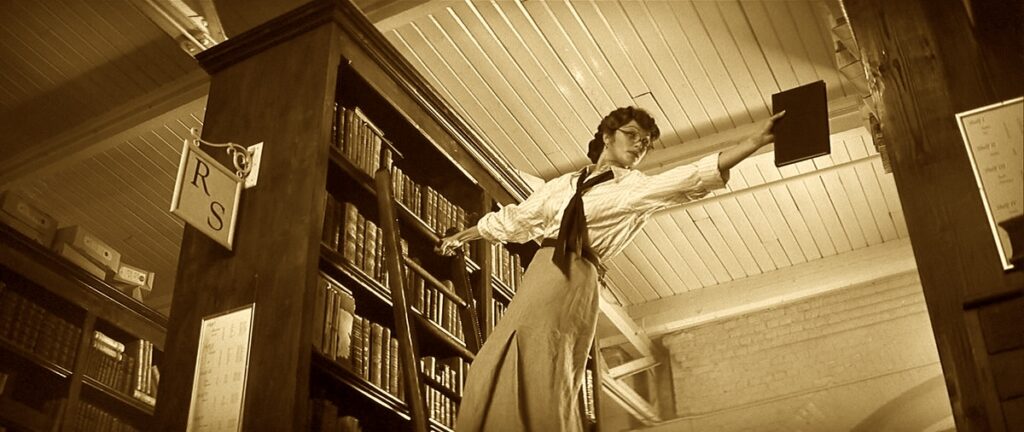
When life shifts, when relationships strain, when careers pivot, when clarity dissolves, you can ALWAYS return to what you built.
Not to relive it.
Not to romanticize it.
Not to dissect it.
But to remember who you are when you choose growth over comfort. Nothing you made in good faith is wasted.
It’s stored.
And when you revisit it, you get to remember something important. You recover momentum, courage, authorship, memory. The parts of yourself that refuse to shrink into an imposed constraint.
You don’t need those constraints anymore. You choose your containers.
theories Summarized
Art is not always decorative. Documentation tracks who you are becoming, and when a reset inevitably arrives you can track your personal continuity.
It is how you track who you are becoming.
It is how continuity is revealed.
The early work is not embarrassing. Well, it’s not always embarssing. But it is structural. It proves that movement was already underway.
A studio is not just a room. It is architecture for identity.
A dance floor is not just a hobby. It is embodied courage.
An improv class is not just exposure. It is training in presence.
When you create with intention; even awkwardly, even imperfectly, you are building containers for the self you are growing into – nothing made in good faith is wasted.
It is stored.
And when the next recalibration comes, you do not start from zero. You return to what you built.
You are not starting over. You are standing on what you already built and your own sovereignty. That sovereignty holds your presence until you are ready to stand in it again.